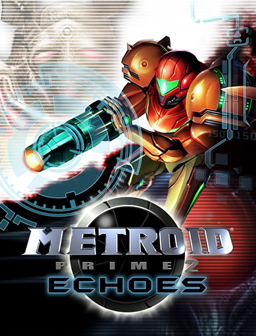
- Best Wii-era aiming showcase: pointer controls give scanning, combat, and lock-on shooting an unusually tactile feel.
- Big-scope finale: Corruption broadens the Prime formula into a galaxy-spanning war without abandoning exploration.
- Hypermode tension: the PED suit turns power itself into a risk-reward mechanic.
- Series importance: it closes the Phazon arc and defines how Wii motion could work in a serious single-player adventure.
“The loudest, fastest, and most openly cinematic chapter of the original Prime trilogy.”
Less isolated than the earlier Prime games, but still unmistakably Metroid when the visor comes down and the world starts opening up.
Prime Goes Wider, Faster, and More Aggressive
Metroid Prime 3: Corruption is the entry where the trilogy deliberately changes its emotional temperature. The first game was about discovery, the second about hostility and duality, and the third about escalation. It opens with a military emergency, keeps pushing Samus across multiple worlds, and treats Phazon not just as lore, but as a playable threat living inside the heroine herself. Even with the bigger cast and more overt narrative, the heart of the game is still classic Prime: scan, observe, unlock, backtrack smarter, and master spaces that first felt intimidating.
Game Data
| Title | Metroid Prime 3: Corruption |
| Release Year | 2007 |
| Developer | Retro Studios |
| Publisher | Nintendo |
| Platform | Nintendo Wii |
| Genre | First-person action-adventure |
| Players | Single-player |
| Original Format | Wii optical disc |
| Core Loop | Explore, scan, upgrade, survive, cleanse, advance |
Pointer aiming, visor-based scanning, lock-on combat, morph ball traversal, planet-hopping progression, and Hypermode risk management through the PED suit.
Six months after Echoes, Samus is drawn into a Phazon war led by Dark Samus. Corrupted herself, she travels across Norion, Bryyo, Elysia, Pirate Homeworld, and Phaaze to end the source.
The Prime game that most clearly embraces cinematic momentum: more dialogue, more urgency, more spectacle, but still anchored in careful environmental progression.
Review / Why It Still Matters on the Wii
The first thing that still surprises about Corruption is how quickly the Wii control scheme starts to feel natural. Pointing Samus’s arm cannon with the remote could have been a novelty layer pasted over a traditional design, but Retro makes it feel like a direct extension of the visor. Scanning, aiming, turning, and locking onto targets come together in a way that gives the game a physical immediacy the GameCube entries did not have.
WHAT CHANGED FROM EARLIER PRIMECorruption is noticeably less isolated than Metroid Prime and a little less oppressive than Echoes. There are more characters, more voiced communication, more overt story beats, and a stronger sense that the galaxy is already in crisis before Samus arrives. For some players that means losing a bit of the eerie solitude that made the first game so special. For others, it gives the trilogy finale exactly the momentum it needs.
HYPERMODE AND COMBAT FLOWThe PED suit is a smart twist because it redefines power as temptation. Hypermode lets Samus turn the tide brutally fast, but the game frames that strength as contamination, not liberation. That makes combat more dramatic than a simple upgrade ladder. The strongest attacks feel thrilling because they are narratively poisoned. Corruption is not just handing you firepower; it is asking whether you are comfortable using it.
PLANETS, PACING, AND SPECTACLEThe planet-hopping structure gives Corruption a more “campaign” feeling than the earlier entries. Norion has urgency, Bryyo feels ancient and wounded, Elysia carries that beautiful broken-tech melancholy, and Pirate Homeworld leans fully into militarized menace. The game is often at its best when it lets those places breathe and you can scan, absorb, and slowly understand them rather than just sprinting to the next objective marker.
FINAL VERDICTMetroid Prime 3: Corruption is not the purest Prime, but it may be the most assertive. It pushes harder on story, on action, on presentation, and on the sensation of being Samus in motion. That makes it different from the first two entries, yet also valuable in its own way. It is the trilogy closer that chooses momentum over serenity — and most of the time, that choice works.
Why Historically Important
Corruption matters because it showed that the Wii could support more than party games and broad-access novelty. This was a technically ambitious, single-player, first-person adventure that used motion controls as a genuine design advantage. Aiming with the Wii Remote, using gestures for certain interactions, and blending lock-on combat with pointer precision helped it stand apart from both traditional console shooters and more casual Wii software.
It also matters within Metroid itself. Corruption closes the Phazon storyline that ran through the original Prime trilogy and gives Dark Samus and Phaaze a proper endpoint. That gives the game a heavy sense of narrative purpose. It is not just another excursion; it is the payoff chapter for years of worldbuilding, artifact hunting, and Phazon dread.
More broadly, it remains one of the clearest examples of a “system seller for the enthusiast audience” on Wii: a game that validated the hardware for players who wanted atmosphere, exploration, boss fights, and layered single-player design rather than novelty alone.
Timeline / Key Milestones
Metroid Prime 3 is shown publicly during the Wii era’s pre-launch buildup, signaling that the Prime series will help define Nintendo’s new control philosophy.
Corruption releases on Wii and is immediately positioned as one of the platform’s major core-player showcases.
The European launch cements the game as the third main chapter of the original Prime run and one of the Wii’s prestige adventures.
Corruption arrives in Japan, completing its regional rollout and closing the original trilogy worldwide.
Metroid Prime: Trilogy brings all three games together on Wii, with Corruption’s control logic effectively becoming the bridge for the full set.
It is remembered as one of the strongest “serious” Wii exclusives and the most action-driven chapter of the original Prime trilogy.
4NERDS Collector Marketplace
A curated access point for players, collectors, and Metroid fans: original Wii copies, Prime Trilogy listings, guides, manuals, accessories, display pieces, and future handmade collector picks — clearly marked as partner links where applicable.
Shop Metroid Prime 3 copies
Browse current Metroid Prime 3: Corruption offers on eBay — useful for original Wii discs, complete-in-box editions, manuals, Prime Trilogy listings, and collector-grade finds.
- Original Wii discs and CIB copies
- Manuals, inserts and collector variants
- Prime Trilogy and related releases
Paid partner link / Werbung — availability and pricing depend on eBay sellers.
Browse Corruption-related finds
Explore Amazon for Metroid Prime 3-related items, Prime Trilogy material, guide books, Wii accessories, display products, posters, and broader Samus-themed collectibles.
- Guides, books and accessories
- Prime trilogy-related products
- Broader Metroid collector browsing
Paid partner link / Werbung — as an Amazon Associate, 4NERDS Gaming may earn from qualifying purchases.
Curated Etsy picks coming soon
Planned for handmade sci-fi retro art, Samus display pieces, Phazon-inspired prints, shelf objects, and museum-style collectibles that match the 4NERDS archive aesthetic.
- Wall art and display-focused pieces
- Handmade and fan-crafted style items
- Added once the setup is ready
Etsy affiliate integration will be added after the tracking setup is approved and tested.
Transparency note: 4NERDS Gaming does not sell these items directly. External shops, prices, stock, shipping terms, and seller conditions may change at any time. eBay and Amazon links in this section are sponsored / paid partner links. Etsy is currently shown as an upcoming integration and does not link out yet.