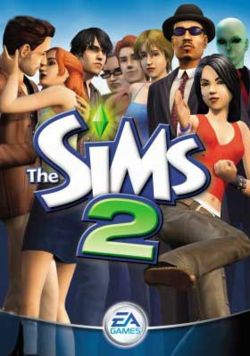
The SimsLife Becomes Play
The everyday-life sandbox that made ordinary routines fascinating: create people, build homes, manage motives, chase careers, ruin relationships, decorate kitchens, and discover that domestic life can be as dramatic, funny, and strategic as any traditional game genre.
Why it changed PC gaming
- New fantasy: it turns mundane life into a sandbox of comedy, control, chaos, and self-expression.
- Systems over scripts: needs, money, careers, furniture, and relationships constantly generate stories on their own.
- Create / Build / Live loop: character creation, house design, and household management fit together with remarkable elegance.
- Historical weight: it became one of the defining PC games of its era and reshaped what mainstream simulation could be.
“A dollhouse, a strategy game, and a comedy engine all at once.”
The Sims is not memorable because it chased spectacle. It is memorable because it made everyday life playable.
The Game That Made Daily Life a Sandbox
The Sims feels obvious now only because it was so successful. Before it, mainstream hits usually sold fantasy through combat, conquest, sport, or speed. The Sims sells a stranger idea: a house, a family, a job, a kitchen, a bad mood, a broken shower, and the chain reaction that follows.
It invites the player to create people, shape their home, and then watch carefully as ordinary decisions spiral into stories. That is why it still matters. It found drama in routine and turned observation itself into play.
At a glanceBest experienced as both a foundational life sim and a beautifully weird systems playground where design, routine, and emergent storytelling collide.
Game Data
| Title | The Sims |
| Release Year | 2000 |
| Release Date | February 4, 2000 |
| Developer | Maxis |
| Publisher | Electronic Arts |
| Lead Designer | Will Wright |
| Original Platform | Microsoft Windows |
| Genre | Life / social simulation |
| Players | Single-player |
| Original Format | CD-ROM |
| Core Loop | Create, build, manage, improvise, observe |
Gameplay pillars
Create-a-Sim, personality tuning, household budgeting, build and buy mode, motive management, jobs and promotions, relationships, neighborhood life, and player-authored domestic storytelling.
Story
There is no fixed authored campaign in the usual sense. The player creates households and writes the story through routines, ambitions, romances, disasters, upgrades, and all the tiny social catastrophes in between.
Most famous design fact
The game’s identity is built around a beautifully simple triad: create Sims, build their homes, then live with the consequences.
Review / A Domestic Sandbox That Still Feels Radical
The first shock of The Sims is not visual or technical. It is conceptual. You are not racing anyone, fighting anyone, or saving the world. You are deciding whether the kitchen should be wider, whether your Sim can afford a better sofa, whether a bad mood will ruin dinner, and whether that broken toilet will cause a household crisis.
Yet the game makes these decisions feel gripping almost immediately because each one feeds into a bigger web of cause and effect. The drama is not imposed from above. It emerges from tiny domestic pressures.
Why the loop worksThe great strength of The Sims is that nothing is truly isolated. Furniture placement affects movement. Movement affects efficiency. Efficiency affects mood. Mood affects social success, career progress, and household stability. A cheap bed is not just a cheap bed. It is a future argument, a late morning, a missed promotion, a bad evening, and maybe a ruined romance.
The genius of The Sims is how smoothly its different layers reinforce one another. Create-a-Sim gives you personalities and intentions. Build mode gives you architecture and layout. Buy mode gives you tools, status, and temptation. Live mode makes all of it collide in real time. A beautiful home is not just decorative — it becomes a system you have to manage.
Why people fell in love with itThe Sims invited a different kind of imagination than most big PC hits of its day. Players were not merely completing authored content. They were inventing households, trying out personalities, building dream homes, creating disasters on purpose, and telling stories afterward.
Final verdictThe Sims remains one of PC gaming’s clearest examples of a new fantasy space opening up all at once. It made house design strategic, everyday routine dramatic, and character management funny in ways few games had attempted before. Its systems still radiate intelligence, and its best stories still feel uniquely personal.
Why It Matters
The Sims is historically important because it proved that a game about ordinary domestic life could become a major global hit. That sounds simple now, but at the time it widened the medium’s mainstream imagination. It made character creation, house design, relationship management, and routine maintenance feel like meaningful play rather than peripheral features.
It also became one of the key PC successes of the early 2000s and helped define life simulation as a serious commercial genre. Just as importantly, it attracted a broader audience than many traditional PC genres had reached before. Its popularity was not built on spectacle alone, but on accessibility, curiosity, humor, and self-expression.
Beyond sales and influence, The Sims matters because it normalized player-authored storytelling. It let people build spaces, shape identities, stage chaos, and share the outcomes. That mix of system design and social imagination would echo for years across life sims, management sandboxes, cozy games, and creator-driven play cultures.
Why it mattered then
It showed that daily life, home design, and relationship management could power one of the era’s biggest PC phenomena.
Why it matters now
It remains a foundational reference point for life sims, emergent storytelling sandboxes, and player-driven domestic worlds.
What it changed
It expanded the audience and vocabulary of simulation games by making creation, decoration, and routine themselves the central play fantasy.
Timeline / Key Milestones
Pre-release materials begin showing The Sims as something unusual for the market: a life simulation about homes, people, and daily drama rather than combat or conquest.
The Sims releases on Windows and quickly establishes itself as one of the standout PC events of the year.
Seven expansion packs steadily broaden the game’s identity, turning the base release into a huge modular sandbox of careers, vacations, pets, fame, and occult weirdness.
The brand expands beyond PC with console versions, showing just how powerful The Sims had become as a cross-platform franchise concept.
The Sims 2 and later sequels build on systems, language, humor, customization, and player-authored storytelling first crystallized here.
The original game returns officially for modern Windows systems through The Sims Legacy Collection, bringing the base game and expansion content back into active circulation.
It remains one of the clearest case studies in how simulation systems can generate humor, attachment, chaos, and long-lived player stories.
The household became the memory — but the big box, CD-ROM, expansion packs, manuals, guides, Complete Collection, and Legacy Collection return are the artifacts.
The Sims belongs in the collector lane because it connects PC big-box culture, Maxis simulation history, one of the most influential design pivots of the 2000s, expansion-pack collecting, and modern re-access through the Legacy Collection.
Where to Play / Collect Today
A PC simulation artifact with strong big-box, expansion-pack, and Maxis collector appeal.
For collectors, The Sims is appealing because it spans several strong lanes: the original PC CD-ROM release, big-box packaging, seven expansions, later Complete Collection sets, strategy guides, and the modern Legacy Collection context.
Amazon notice: As an Amazon Associate I earn from qualifying purchases.
A curated access point for Sims fans: original PC big-box releases, CD-ROM editions, Complete Collection sets, expansion packs, manuals, guides, modern browsing, and archive-friendly display extras.
Shop original PC boxes and collections
Browse current Sims offers on eBay — ideal for big-box editions, CD-ROM copies, Complete Collection sets, expansion packs, manuals, guidebooks, and condition-based collector comparison.
- Original PC releases and boxed expansions
- CD-ROMs, manuals, strategy guides, and Complete Collection sets
- Condition and price comparison
Paid partner link / Werbung — availability, condition, pricing, and shipping depend on individual eBay sellers.
Browse Sims and PC-sim finds
Explore Amazon for Sims-related books, guides, PC accessories, modern listings, franchise items, and broader Maxis / simulation collector finds.
- Sims books, guides, merch, and accessories
- PC simulation and Maxis-related extras
- Broader retro PC and collector products
Paid partner link / Werbung — as an Amazon Associate, 4NERDS Gaming may earn from qualifying purchases.
Curated Etsy picks coming soon
Planned for handmade Sims display labels, retro PC shelf cards, Maxis-style prints, collector plaques, and museum-style presentation pieces that match the 4NERDS archive aesthetic.
- Wall art and display-focused pieces
- Handmade and fan-crafted style items
- Added once the setup is ready
Etsy affiliate integration will be added after the tracking setup is approved and tested.