Alone in the DarkDerceto Mansion & the Birth of 3D Horror
Infogrames’ haunted-house landmark sent Edward Carnby or Emily Hartwood into Derceto Mansion: polygon characters, painted backgrounds, fixed camera angles, weight-based inventory, Lovecraftian dread, occult documents, fragile weapons, sudden death, and a design vocabulary that would echo through Resident Evil and survival horror for decades.
Why it still matters
- Survival-horror blueprint: Alone in the Dark established a haunted-mansion grammar of fixed angles, vulnerable characters, puzzles, inventory pressure, and dangerous rooms.
- Technical leap: polygon characters placed over hand-drawn 2D backgrounds created a cinematic horror space years before PlayStation survival horror made it mainstream.
- Atmosphere first: its power comes from silence, awkward movement, strange framing, documents, sound, and the constant sense that the next room might kill you.
- Genre legacy: its influence on Resident Evil and later fixed-camera horror makes it one of the most important ancestor texts in horror game design.
“Before survival horror had a polished formula, Derceto already understood the fear of opening a door.”
Alone in the Dark is rough, strange, and technically ancient — but its haunted design logic still feels historic.
The Mansion That Taught Horror Games How to Watch You
Alone in the Dark begins with a premise that feels almost mythic now: a mansion in 1920s Louisiana, a suspicious death, a choice between Edward Carnby and Emily Hartwood, and a slow climb into an attic where the house immediately proves that it is not passive scenery. Derceto is hostile from the first room. It watches, waits, blocks exits, hides information, and punishes the player for treating it like a normal adventure-game space.
What makes the game historically electric is not just that it is scary. It is how it stages fear. The fixed cameras are not merely technical shortcuts. They make the mansion feel directed. Every angle can conceal danger, frame a monster, or turn a simple walk across a room into a theatrical moment. The result is a horror language that later games would refine, but not invent from nothing.
At a glanceBest experienced as a museum-grade survival-horror foundation: mechanically stiff by modern standards, but still fascinating for its atmosphere, resource anxiety, pre-rendered staging, puzzle logic, and early understanding that horror games are often most frightening when the camera refuses to show everything.
Game Data
| Title | Alone in the Dark |
| Original Release | 1992 |
| Original Platform | MS-DOS |
| Later Platforms | Mac OS, PC-98, FM Towns, 3DO, RISC OS, iOS, and modern digital PC storefront availability |
| Developer | Infogrames |
| Publisher | Infogrames in Europe; I•Motion / Interplay in North America |
| Director / Designer | Frédérick Raynal |
| Producer | Bruno Bonnell |
| Programmers | Frédérick Raynal, Franck De Girolami |
| Artists | Didier Chanfray, Yaël Barroz, Jean-Marc Torroella |
| Writers | Hubert Chardot, Franck Manzetti |
| Composer | Philippe Vachey |
| Genre | Survival horror / action-adventure |
| Players | Single-player |
| Playable Characters | Edward Carnby or Emily Hartwood |
| Setting | Derceto Mansion, Louisiana, 1920s |
| Core Loop | Explore rooms, solve puzzles, manage inventory weight, read documents, survive monsters, unlock new areas, and descend toward the truth beneath Derceto |
Gameplay pillars
Fixed camera angles, polygon characters, painted backgrounds, puzzle solving, document-based storytelling, weight-limited inventory, weapons that feel fragile, avoid-or-fight enemy decisions, and rooms designed around tension.
Story
Jeremy Hartwood has died in Derceto Mansion. Edward Carnby or Emily Hartwood enters the house to investigate, only to become trapped in a haunted estate shaped by occult history, buried caverns, monstrous forces, and the legacy of Ezechiel Pregzt.
Signature design fact
Alone in the Dark combines 3D polygon characters with 2D backgrounds and fixed camera cuts, creating a cinematic horror vocabulary before that vocabulary became associated with Resident Evil.
Review / Why Derceto Still Feels Important
The opening attic remains one of the most important rooms in horror-game history. It teaches quickly: the camera is strange, the controls are deliberate, monsters can interrupt exploration, furniture may matter, items can become puzzles, and the player is not here to dominate the house. The player is here to survive long enough to understand it.
By modern standards, Alone in the Dark can feel brittle. Movement is stiff, combat is awkward, and several puzzles require an older kind of adventure-game patience. But this roughness also gives the game texture. It never lets the player feel graceful. Edward and Emily are vulnerable bodies inside a space that seems older, stronger, and more malicious than they are.
Why the structure is so smartDerceto works because it is not simply a sequence of monster rooms. It is an information space. Documents, locked doors, strange objects, environmental hints, occult references, and architectural progression all push the player deeper into the mansion’s logic. Horror comes from discovery as much as danger.
This is not a smooth modern horror game. It can be cryptic, visually crude, and mechanically stubborn. Some interactions feel less like elegant design and more like 1992 experimentation. Players coming from later survival horror should expect an ancestor, not a polished descendant.
Why it still landsThe reason Alone in the Dark remains so compelling is that its core ideas are still recognizable. Fixed framing, dangerous rooms, puzzle-gated progression, vulnerable protagonists, documents that thicken the backstory, and a mansion designed as a psychological maze — all of these would become survival-horror fundamentals.
Final verdictAlone in the Dark is not merely “important for its time.” It is one of the places where horror games learned how to stage space, control vision, and turn technical limitation into dread. Its polygons have aged. Its influence has not.
Why It Matters
Alone in the Dark is historically important because it helped define the survival-horror grammar before the term had fully settled into popular usage. It showed that horror could be built from staging, perspective, vulnerability, resource anxiety, documents, puzzle friction, and a hostile environment rather than constant action.
Technically, it mattered because it combined three-dimensional characters with two-dimensional background art and fixed cinematic angles. That hybrid allowed Infogrames to create a visually directed horror space despite the limits of early 1990s home computers. The game looks primitive now, but the design insight behind it remains powerful.
Culturally, Alone in the Dark sits at the beginning of a line that runs through Resident Evil, Silent Hill, and later horror games that treat camera, inventory, and architecture as tools of fear. It is one of the clearest examples of a game whose historical value comes not from polish, but from invention.
Why it mattered then
It made PC horror feel cinematic, spatial, and dangerous in a way few games of the early 1990s could match.
Why it matters now
It remains a vital ancestor for fixed-camera horror, mansion design, puzzle survival, and the emotional rhythm of vulnerable exploration.
What it changed
It established a haunted-house design language that later survival-horror classics would refine for broader audiences.
Timeline / Key Milestones
Frédérick Raynal and the Infogrames team develop the technology and haunted-house concept that will become Alone in the Dark.
Alone in the Dark launches and stands out immediately for its polygon characters, painted rooms, fixed cameras, and horror atmosphere.
Wider distribution and CD-ROM versions help establish the game as a PC horror landmark beyond its initial European release.
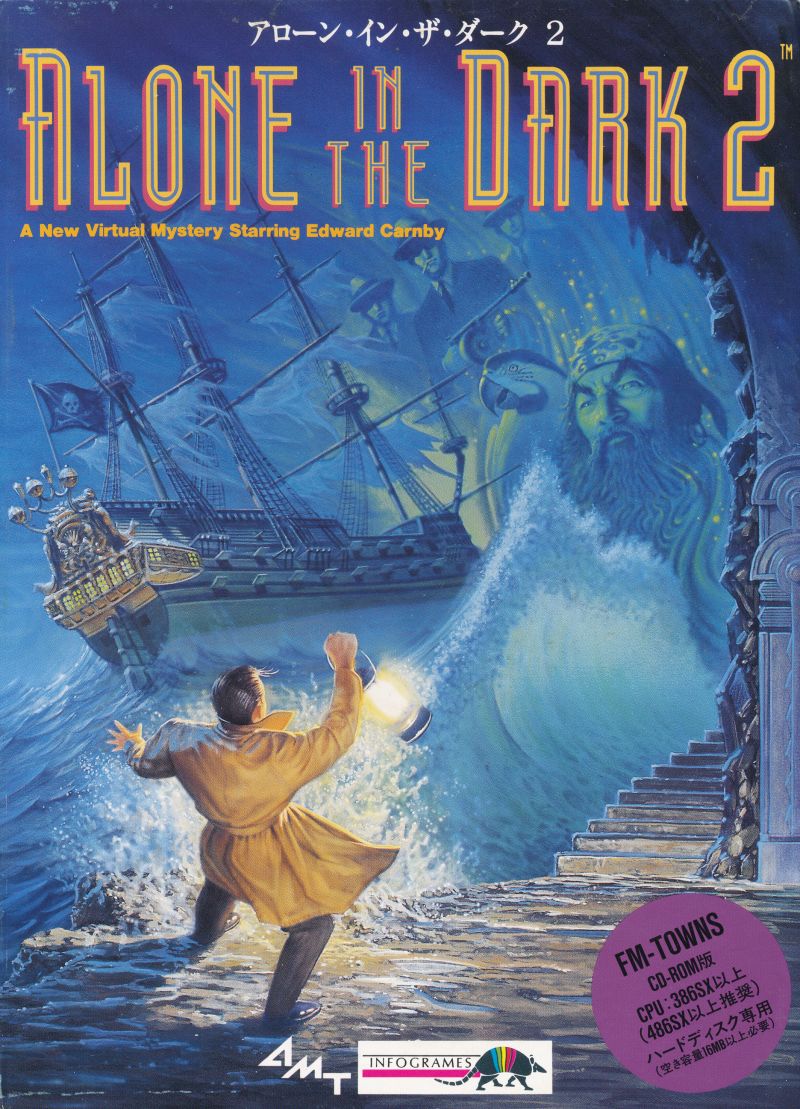
The sequel expands the formula with more action, pirates, firearms, and a different tone while keeping the Carnby identity alive.
Ports and re-releases spread Derceto’s haunted design to additional computer and console audiences.
Capcom’s classic refines fixed-camera survival horror for PlayStation and makes many of Alone in the Dark’s ideas mainstream.
The New Nightmare and the 2008 reboot attempt to modernize the franchise for later generations with mixed levels of success.
THQ Nordic’s Alone in the Dark reimagining returns to Derceto with a new story, modern presentation, and explicit homage to the 1992 foundation.
Alone in the Dark remains a key archive object for understanding how horror games became cinematic, spatial, and systemically tense.
The attic became a collector artifact — DOS boxes, CD-ROM editions, 3DO copies, Mac releases, manuals, clue books, European Infogrames variants, sequel boxes, and modern reimagining items all belong to the Derceto shelf.
Alone in the Dark belongs in the collector lane because it is not just another horror game: it is a technical milestone, a survival-horror ancestor, a boxed-PC artifact, and a franchise seed that connects early 1990s DOS culture to modern horror nostalgia.
Where to Play / Collect Today
A foundational horror artifact with strong boxed-PC, CD-ROM, 3DO, Infogrames, Edward Carnby, Derceto, and survival-horror-history collector appeal.
For collectors, Alone in the Dark is especially interesting because the physical object tells the story of early PC horror: large boxes, manual-heavy play, DOS installation culture, early CD-ROM presentation, and a design breakthrough that later console horror would popularize.
Amazon notice: As an Amazon Associate I earn from qualifying purchases.
A curated access point for survival-horror collectors, DOS-era PC collectors, Infogrames fans, Derceto historians, horror-game preservation readers, and players tracing the path from Alone in the Dark to Resident Evil.
Shop Alone in the Dark collectibles
Browse current Alone in the Dark offers on eBay — useful for DOS big boxes, CD-ROM editions, 3DO copies, Mac versions, manuals, clue books, sequel bundles, and collector-grade Infogrames horror finds.
- Original DOS boxes, CD-ROM versions, 3DO ports, and import variants
- Manuals, strategy guides, sequel boxes, and Derceto-era franchise items
- Condition, completeness, media quality, region, and price comparison
Paid partner link / Werbung — availability, seller terms, shipping, and pricing depend on individual eBay sellers.
Browse related horror finds
Explore Amazon for Alone in the Dark-related items, modern reimagining editions, horror-game books, retro-gaming history titles, survival-horror media, and broader collector extras.
- Modern releases, books, guides, and horror-game history items
- Broader survival-horror and retro PC collector extras
- Useful companion browsing for new readers and collectors
Paid partner link / Werbung — as an Amazon Associate, 4NERDS Gaming may earn from qualifying purchases.
Curated Etsy picks coming soon
Planned for handmade Derceto Mansion archive art, lantern-lit horror prints, Edward Carnby-inspired shelf pieces, fixed-camera nostalgia art, and museum-style collectibles that match the 4NERDS archive aesthetic.
- Wall art and display-focused pieces
- Handmade and fan-crafted style items
- Added once the setup is ready
Etsy affiliate integration will be added after the tracking setup is approved and tested.