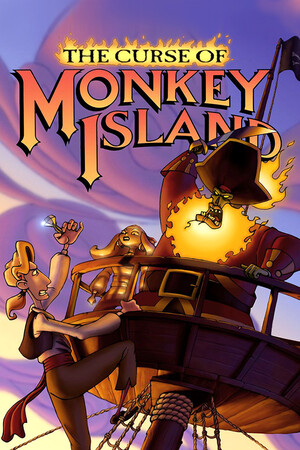
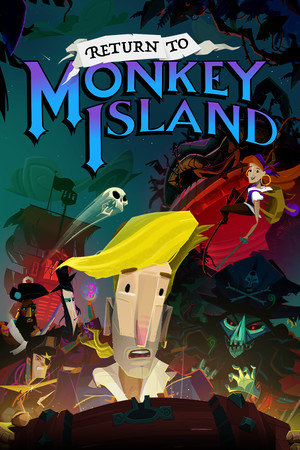
The Secret of Monkey IslandGuybrush, Ghost Pirates & Insult Sword Fighting
Lucasfilm Games’ legendary pirate comedy adventure turned a young wannabe pirate into one of the most beloved characters in computer-game history: Guybrush Threepwood, Elaine Marley, the ghost pirate LeChuck, Mêlée Island, Monkey Island, insult sword fighting, SCUMM verbs, absurd puzzle logic, and a warmth that still feels like stepping into a candlelit Caribbean storybook.
Why it still matters
- Adventure-game gold standard: it helped define the Lucasfilm approach to puzzle design, dialogue, exploration, and player-friendly comedy.
- Unforgettable voice before voices: Guybrush, Elaine, LeChuck, Stan, the Voodoo Lady, Meathook, and the cannibals all feel vivid even in text-only form.
- Insult sword fighting: one of the smartest comic mechanics of the era, turning dialogue memory and joke timing into combat.
- Historical warmth: few 1990 computer games feel this inviting, funny, polished, and emotionally nostalgic at the same time.
“The Secret of Monkey Island is not just a pirate adventure — it is the sound of the SCUMM era smiling.”
It remains one of the clearest examples of how humor, interface, art, music, and puzzle design can create a timeless fictional place.
A Pirate Comedy That Became Adventure-Game Mythology
The Secret of Monkey Island begins with one of the most perfect adventure-game promises ever written: a young man arrives on Mêlée Island and says he wants to be a pirate. From that simple wish, Lucasfilm Games builds an entire comic world: pirate leaders, shady salesmen, grog, circus performers, insult duels, haunted ships, cannibals, voodoo roots, and a ghost pirate who is somehow both dangerous and ridiculous.
What makes the game endure is not just the jokes. It is the shape of the world. Every location feels authored, every conversation feels playful, and every puzzle feels like it belongs to the logic of a cartoon pirate universe. Mêlée Island is mysterious but safe enough to explore. Monkey Island is strange but charming. LeChuck is threatening but never drains the game of its wit.
At a glanceBest experienced as a pure golden-age point-and-click adventure: elegant, funny, warm, wonderfully paced, and still one of the strongest entry points into classic PC gaming.
Game Data
| Title | The Secret of Monkey Island |
| Release Year | 1990 |
| Original Developer | Lucasfilm Games |
| Publisher | Lucasfilm Games; U.S. Gold in Europe; The Software Toolworks for CD-ROM release |
| Director | Ron Gilbert |
| Designers | Ron Gilbert, Dave Grossman, Tim Schafer |
| Writers | Ron Gilbert, Dave Grossman, Tim Schafer |
| Artists | Steve Purcell, Mark Ferrari, Mike Ebert, Martin Cameron |
| Composer Credits | Michael Land, Patrick Mundy |
| Engine | SCUMM |
| Genre | Point-and-click graphic adventure |
| Original Platforms | MS-DOS, Amiga, Atari ST; later Mac, FM Towns, Sega CD and other versions |
| Main Character | Guybrush Threepwood |
| Key Characters | Elaine Marley, LeChuck, the Voodoo Lady, Stan, Carla, Otis, Meathook, Herman Toothrot |
| Setting | Mêlée Island and Monkey Island, in a comic fantasy version of the Caribbean age of piracy |
| Core Loop | Explore islands, talk to characters, collect objects, combine clues, solve puzzles, master insult sword fighting, and uncover the secret behind LeChuck and Monkey Island |
Gameplay pillars
Verb-based SCUMM interface, inventory puzzles, dialogue trees, non-lethal exploration, comedy-driven problem solving, insult sword fighting, atmospheric island hubs, and puzzle logic that rewards curiosity rather than punishment.
Story
Guybrush Threepwood arrives on Mêlée Island to become a pirate. After completing three pirate trials, he falls for Governor Elaine Marley and becomes entangled with the ghost pirate LeChuck, whose obsession with Elaine leads Guybrush toward Monkey Island itself.
Signature design fact
The insult sword fighting system turns verbal comedy into gameplay: players learn pirate insults and matching comebacks, making wit more important than reflexes.
Review / Why It Still Plays Like a Warm Memory
The opening instantly communicates tone. Guybrush arrives on Mêlée Island with ridiculous ambition and complete sincerity. The island is dark, but not grim. Dangerous, but welcoming. The player immediately understands that this is not a game about dying in every room. It is a game about poking the world until the joke reveals the solution.
The SCUMM interface is essential to that feeling. The verbs make the player think in actions: open, close, push, pull, talk to, pick up, use. It turns comedy into a set of possible experiments. Even failed interactions often reward the player with a line, a mood, or a hint of character.
Why the writing still worksMonkey Island’s comedy rarely feels random. It is built on character voice: Guybrush’s earnest stupidity, Elaine’s confidence, LeChuck’s melodramatic villainy, Stan’s sales-machine energy, and the Voodoo Lady’s amused mystery. The jokes work because the world believes in itself just enough.
Some puzzle chains still expect the player to think like a 1990 adventure fan. A few solutions require experimentation that modern players might read as obscure. The interface also belongs unmistakably to its era, especially in the early verb-heavy versions.
Why it still landsAge barely harms the game’s core appeal because the world is so generous. The player is usually safe to explore, the writing remains sharp, the music still carries tropical mystery, and the game’s structure keeps presenting new comic situations before the rhythm grows stale.
Final verdictThe Secret of Monkey Island is not merely a beloved old adventure. It is a blueprint for how warmth, comedy, puzzle design, and fictional place can become inseparable. It belongs near the center of any serious archive of computer-game history.
Why It Matters
The Secret of Monkey Island is historically important because it crystallized the Lucasfilm Games philosophy: adventure games could be clever without being cruel, funny without becoming disposable, and puzzle-driven without relying on constant death, dead ends, or punishment.
It also helped define the tone of the golden age of graphic adventures. The SCUMM interface, dialogue trees, cinematic cutaways, and character-rich island design showed that computer games could feel written, staged, and performed while still remaining deeply interactive.
Most importantly, it proved that comedy could carry a full adventure world. Monkey Island’s influence is not only visible in later adventure games; it echoes in any game that treats dialogue, character, timing, and tone as central design materials.
Why it mattered then
It gave PC adventure players a funny, forgiving, beautifully authored pirate world at a time when many adventure games were far harsher and more fragile.
Why it matters now
It remains one of the easiest classics to recommend because its humor, pacing, music, and worldbuilding still feel alive.
What it changed
It strengthened the LucasArts adventure identity and helped make comedy, dialogue, and humane puzzle design central to the genre’s legacy.
Timeline / Key Milestones
Ron Gilbert begins developing ideas for a pirate comedy adventure that would eventually become Monkey Island.
The Secret of Monkey Island launches as a Lucasfilm Games point-and-click adventure and quickly becomes a defining title of the SCUMM era.
A 256-color version improves the visual presentation and helps the game reach its most familiar classic look.
LeChuck’s Revenge expands the tone, music, art direction, and puzzle ambition of the series.
The CD-ROM release updates the interface and soundtrack presentation, becoming another important preservation version.
The series returns with hand-drawn cartoon animation and full voice acting, bringing Guybrush into a new presentation era.
LucasArts releases a Special Edition with new art, remastered audio, voice acting, and the ability to switch to the original audiovisual style.
Ron Gilbert and Dave Grossman return to the series, underlining the long cultural life of the original game’s characters and mysteries.
The Secret of Monkey Island remains one of the most loved and most approachable classics in the history of graphic adventures.
The pirate comedy became a collector artifact — original DOS big boxes, Amiga and Atari ST releases, VGA editions, CD-ROM versions, manuals, code wheels, Lucasfilm Games shelf pieces, Special Edition access, soundtrack nostalgia, and the beginning of one of adventure gaming’s most beloved series.
The Secret of Monkey Island belongs in the collector lane because it is both a playable classic and a cultural object: Steve Purcell cover art, Lucasfilm Games branding, SCUMM history, Guybrush mythology, and decades of pirate-adventure nostalgia in one package.
Where to Play / Collect Today
A golden-age adventure artifact with strong DOS, Amiga, Atari ST, Lucasfilm Games, SCUMM, Steve Purcell, Guybrush, Elaine, LeChuck, code-wheel, and Special Edition collector appeal.
For collectors, the original game is especially interesting because condition and completeness matter: big box, disks, manual, reference cards, copy-protection wheel, language version, platform, and edition type all shape the shelf value.
Amazon notice: As an Amazon Associate I earn from qualifying purchases.
A curated access point for LucasArts collectors, PC big-box collectors, Amiga and Atari ST collectors, point-and-click fans, Monkey Island completionists, soundtrack nostalgics, and readers discovering Guybrush for the first time.
Shop The Secret of Monkey Island collectibles
Browse current The Secret of Monkey Island offers on eBay — useful for DOS big boxes, Amiga releases, Atari ST versions, CD-ROM editions, manuals, code wheels, reference cards, Lucasfilm Games shelf items, and series bundles.
- DOS, Amiga, Atari ST, Mac, FM Towns, Sega CD, and CD-ROM variants
- Big boxes, manuals, code wheels, disks, reference cards, posters, and LucasArts bundles
- Condition, completeness, platform, region, language, and price comparison
Paid partner link / Werbung — availability, seller terms, shipping, and pricing depend on individual eBay sellers.
Browse related adventure finds
Explore Amazon for Monkey Island-related items, adventure-game books, LucasArts history material, retro-gaming history titles, pirate-game extras, and broader collector material.
- Books, guides, retro-gaming history titles, and adventure-game extras
- Modern releases, related classics, and collector-friendly companion items
- Useful companion browsing for new readers and collectors
Paid partner link / Werbung — as an Amazon Associate, 4NERDS Gaming may earn from qualifying purchases.
Curated Etsy picks coming soon
Planned for handmade pirate-adventure archive art, Mêlée Island mood prints, SCUMM-era display pieces, retro adventure posters, and museum-style collectibles that match the 4NERDS archive aesthetic.
- Wall art and display-focused pieces
- Handmade and fan-crafted style items
- Added once the setup is ready
Etsy affiliate integration will be added after the tracking setup is approved and tested.