Airwolf 1984
A stern, screen-by-screen helicopter rescue game built around drift, gravity, and survival pressure — less a glamorous TV adaptation than a hard-edged 8-bit maze shooter with surprisingly distinctive movement.
Why it still stands out
- Distinct movement feel: Airwolf’s gravity-heavy helicopter handling gives it real tension instead of arcade float.
- Strong mood: the subterranean rescue mission feels claustrophobic, hostile, and unusually severe for an early tie-in.
- Readable objective: destroy defenses, descend deeper, recover scientists, and survive the trip back.
- Historical angle: it shows how early 1980s TV licenses could become genuinely tough, mechanically focused home-computer games.
“A TV license on the surface, a brutal little rescue maze underneath.”
Airwolf is dated, unforgiving, and undeniably interesting — exactly the kind of 8-bit relic that earns a second look.
The Harder-Than-Expected Face of Early Licensed Gaming
Airwolf is one of those early licensed games that becomes more interesting the longer you look at it. On paper it is simply a tie-in to a popular television series. In practice it plays like a severe, side-view rescue shooter built around helicopter momentum, environmental danger, and repeated screen-clearing pressure.
Its appeal is not polish in the modern sense, but texture: it feels specific, mean, and unmistakably of its era. The machine feels heavy. The rooms feel narrow. Every screen asks for discipline before confidence.
At a glanceBest approached as an 8-bit artifact with its own personality: stiff in places, sharp in identity, and far more demanding than the TV branding suggests.
Game Data
| Title | Airwolf |
| Release Year | 1984 |
| Developer | Elite Systems |
| Publisher | Elite Systems |
| Platform | ZX Spectrum 48K |
| Genre | Action / shooter / helicopter game |
| Players | Single-player |
| Original Format | Cassette tape |
| Core Loop | Navigate, destroy defenses, rescue scientists, survive |
Gameplay pillars
Momentum control, steady altitude management, enemy avoidance, screen-by-screen progression, and route discipline inside a hostile underground base.
Story
Stringfellow Hawke pilots Airwolf into a subterranean enemy stronghold to rescue imprisoned scientists, breaking through defense systems to descend ever deeper.
Most distinctive design fact
The helicopter does not behave like a carefree arcade ship: gravity and inertia shape the entire game, making positioning tense and sometimes punishing.
Review / Why It Still Feels Different
The first impression Airwolf makes is that it is not trying to flatter the player. This is not an instantly breezy fantasy of helicopter heroism. The machine feels heavy. The space feels dangerous. Targets, barriers, and positioning all matter immediately.
That stern attitude is a big part of the game’s identity. It asks for care before confidence, and that alone separates it from a lot of other early tie-in material.
Why the helicopter feel mattersThe best thing about Airwolf is also the thing that can make it frustrating: movement has consequence. You cannot simply drift through each screen like a loose arcade craft. The helicopter has weight, and that weight transforms the mission into something closer to spatial problem-solving.
The rescue premise gives the game a useful sense of descent and escalation. You are not just shooting at targets for score; you are trying to break open a route into a fortified underground complex, remove its control systems, and reach the prisoners below.
That makes each room feel purposeful. Even when the action is simple, the overall structure gives the game an unusual sense of mission.
Where it feels datedAirwolf absolutely carries the limits of its era. It can feel repetitive, rigid, and less expressive than later helicopter games. Players looking for smooth flow or rich variety may bounce off it quickly.
Final verdictAirwolf is not an all-purpose recommendation, but it is a very good archive recommendation. It captures something fascinating about early 1980s computer gaming: licensed material was often filtered through blunt, distinctive design rather than polished spectacle.
Why It Matters
Airwolf matters less because it was a blockbuster masterpiece and more because it captures a particular moment in game history very clearly. It is an early television license translated into home-computer form without becoming soft or purely decorative.
Instead of trying to imitate cinematic spectacle, it becomes a hard-edged mechanical game with its own rules, its own pace, and its own identity. The Airwolf name gave the game visibility, but the actual experience belongs firmly to the logic of 8-bit home design: simple audiovisual language, strict challenge, and a focus on repeat attempts rather than broad accessibility.
It also belongs to the larger story of licensed games before the mega-budget era. Titles like this remind us that adaptation once meant interpretation rather than direct replication: the TV fantasy became an underground rescue shooter.
Why it mattered then
It turned a popular TV brand into a recognizably hard 8-bit mission game rather than a superficial tie-in.
Why it matters now
It remains a sharp example of how early licensed games often had stronger mechanical identity than people expect.
What it represents
The era when home-computer action games leaned on tension, repetition, and strict movement feel instead of broad accessibility.
Timeline / Key Milestones
Airwolf launches through Elite Systems on ZX Spectrum, establishing the series’ first game as a side-view helicopter rescue shooter.
Versions appear on other home-computer formats including Commodore 64, Amstrad CPC, and BBC Micro-era territory, spreading the license across the European micro scene.
The game is absorbed into compilation culture, showing how quickly 1980s home-computer releases moved from headline product to value-pack archive material.
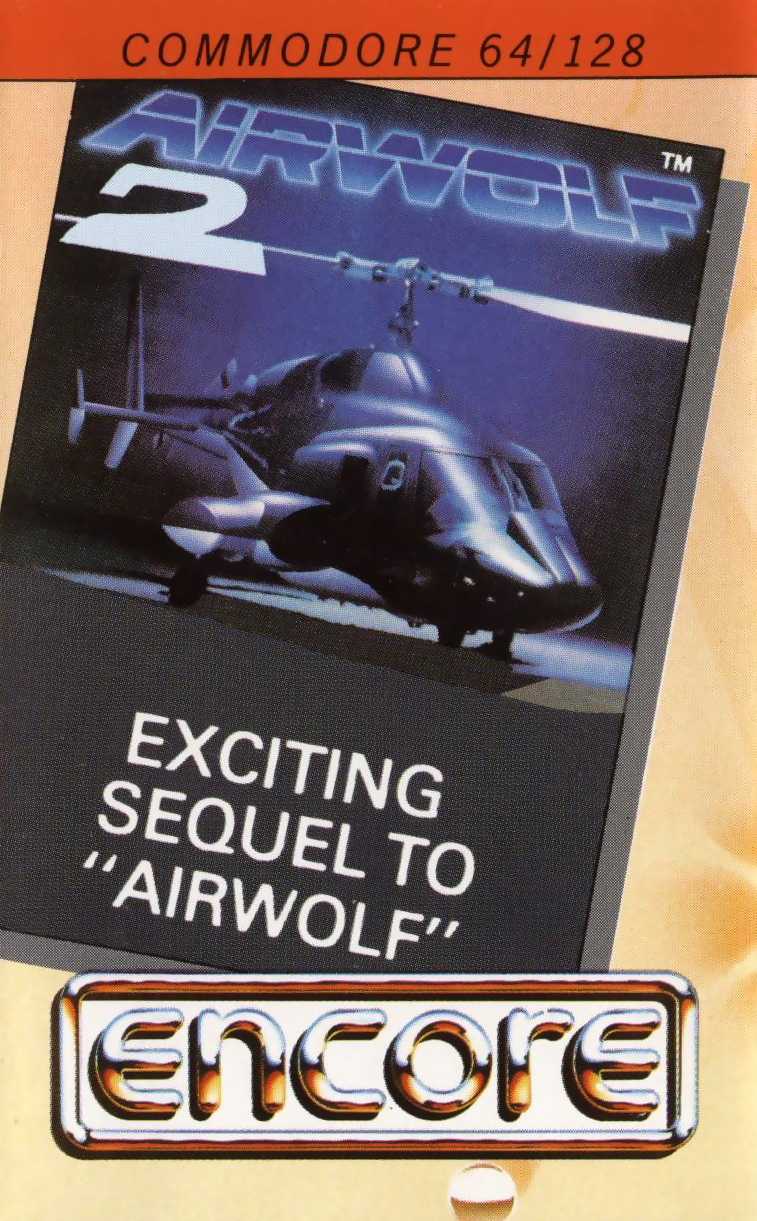
Airwolf II follows, proving the brand had enough recognition in games to survive beyond the first adaptation.
Airwolf survives as a curio of licensed 8-bit design — remembered less for polish than for atmosphere, difficulty, and unusual helicopter handling.
The license is the hook — but the cassette is the artifact.
Airwolf belongs on a collector shelf because the box art, cassette format, TV-license context, and harsh 8-bit design all tell the same story: early licensed games were often stranger, tougher, and more mechanical than their covers suggested.
Where to Find Airwolf Today
A severe 8-bit mission wrapped in TV-license packaging.
For collectors, Airwolf is attractive because it connects ZX Spectrum history, 1980s TV licensing, Elite Systems, helicopter rescue design, cassette culture, and European microcomputer collecting. The best route is usually to compare cassette releases, home-computer ports, boxed copies, manuals, and bundles.
Amazon notice: As an Amazon Associate I earn from qualifying purchases.
A curated access point for ZX Spectrum collectors, 1980s TV-license fans, and helicopter-shooter enthusiasts: original-market searches, related media, books, and future handmade display pieces.
Shop Airwolf originals
Browse current Airwolf game offers on eBay — ideal for ZX Spectrum cassette releases, home-computer ports, boxed editions, manuals, bundles, and collector-condition finds.
- Original cassette and boxed releases
- ZX Spectrum, C64 and microcomputer variants
- Condition and price comparison
Paid partner link / Werbung — availability and pricing depend on eBay sellers.
Browse Airwolf-related finds
Explore Amazon for Airwolf-related items, TV-series media, retro gaming books, classic helicopter-action nostalgia, and broader 1980s collector extras.
- Books, media and retro extras
- Gift ideas and broader nostalgia finds
- Fast route for related Airwolf browsing
Paid partner link / Werbung — as an Amazon Associate, 4NERDS Gaming may earn from qualifying purchases.
Curated Etsy picks coming soon
Planned for handmade retro art, helicopter prints, cassette-display pieces, shelf objects, and museum-style collectibles that match the 4NERDS archive aesthetic.
- Wall art and display-focused pieces
- Handmade and fan-crafted style items
- Added once the setup is ready
Etsy affiliate integration will be added after the tracking setup is approved and tested.