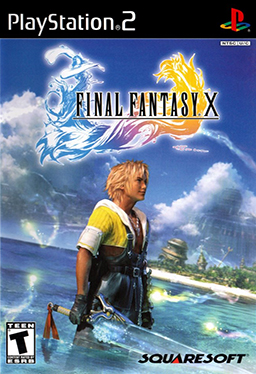
Final Fantasy XIVana’diel Never Logged Off
Square’s first online Final Fantasy transformed the series into a living world: Vana’diel, PlayOnline, nations, linkshells, jobs, parties, skillchains, auction houses, Trust allies, expansion sagas, and one of the longest-running shared worlds in role-playing history.
Why it still matters
- First online Final Fantasy: Final Fantasy XI moved the mainline series into persistent-world MMORPG design instead of a fixed single-player party journey.
- Cross-platform landmark: it became a defining example of console and PC players sharing the same world at a time when that idea still felt unusually ambitious.
- Job-system legacy: warrior, monk, white mage, black mage, thief, red mage, and many later jobs turned Vana’diel into a long-term identity machine.
- Living archive: its world is not only remembered through screenshots and cartridges — it is remembered through years of player names, linkshells, camps, and stories.
“Final Fantasy XI is the Final Fantasy that became a place.”
Less a chapter you finish, more a world you inhabit, leave, remember, and sometimes return to years later.
The Mainline Final Fantasy That Refused to End
Final Fantasy XI was a radical break. After the cinematic focus of VII, VIII, IX, and X, Square did something far stranger than simply improving graphics again: it turned Final Fantasy into a shared online world where the protagonist was not Tidus, Squall, Cloud, or Zidane, but a player-created adventurer standing in San d’Oria, Bastok, Windurst, or Jeuno.
That shift changed everything. Progress was no longer just a private story arc. It was party recruitment, waiting for a healer, learning your job role, reading the chat log, watching the Auction House, forming linkshell relationships, and discovering that Final Fantasy music could become the soundtrack to routine life.
At a glanceBest experienced as a living museum piece of early online JRPG design: demanding, communal, slow, sometimes awkward, but historically enormous because it proved that Final Fantasy could become a persistent social world.
Game Data
| Title | Final Fantasy XI |
| Original Release | May 16, 2002 |
| Original Platform | PlayStation 2 in Japan; Windows followed later in 2002 |
| Later Platforms | Microsoft Windows; Xbox 360 |
| Current Main Access | Windows PC |
| Developer | Square |
| Publisher | Square; later Square Enix |
| Original Producer / Designer | Hiromichi Tanaka |
| Early Director | Koichi Ishii |
| Programmer | Ken Narita |
| Artist | Ryosuke Aiba |
| Writers | Nobuaki Komoto, Masato Kato |
| Composers | Naoshi Mizuta, Kumi Tanioka, Nobuo Uematsu |
| Genre | Massively multiplayer online role-playing game |
| Players | Online multiplayer |
| Core Loop | Create an adventurer, choose a nation, level jobs, form parties, complete missions, earn gear, join linkshells, explore Vana’diel |
Gameplay pillars
Job switching, party roles, skillchains, magic bursts, missions, quests, linkshells, auction-driven economy, Notorious Monsters, dungeons, expansion storylines, endgame systems, Trust NPCs, and slow-life activities such as crafting, fishing, and farming.
Story
Players enter Vana’diel as adventurers aligned with nations such as San d’Oria, Bastok, or Windurst. From early national missions to expansion sagas, the world gradually opens into conflicts involving beastmen, ancient powers, lost lands, gods, and the long memory of the Crystal War.
Signature design fact
Final Fantasy XI was not merely multiplayer Final Fantasy. It was a full MMORPG with subscription play, shared servers, long-form character identity, and cross-platform ambition between console and PC worlds.
Review / Why Vana’diel Still Has Gravity
The first shock of Final Fantasy XI is not combat. It is scale. You create a character, pick a race, choose a nation, and suddenly Final Fantasy is no longer waiting for you alone. Other players run past. Chat scrolls. The economy is alive. Veterans know routes you do not. The world feels indifferent in a way single-player Final Fantasy never does.
That difficulty is part of the magic. Vana’diel makes the player learn how to belong. The game teaches through inconvenience, travel time, social dependency, and mystery. It can be harsh, but that harshness makes memory stronger: the first party, the first dunes camp, the first airship pass, the first linkshell, the first time Jeuno feels like home.
Why the job system worksFinal Fantasy XI’s job system is powerful because it turns mechanics into identity. A white mage is not just a menu option. It is responsibility. A thief is not only damage; it is positioning and timing. A black mage is not only spells; it is restraint, burst windows, and danger. In a shared world, class identity becomes social identity.
Final Fantasy XI still carries the weight of its age. Menus, installation flow, interface expectations, travel logic, item systems, and combat pacing can feel demanding for players raised on modern MMOs or streamlined single-player RPGs. It is not built around instant gratification.
Why it still landsWhat makes it endure is that its slowness creates attachment. Vana’diel does not behave like a theme park of disposable quests. It feels like a place with habits: music you associate with towns, dangerous routes you respect, monsters you avoid, and player memories that become part of the archive.
Final verdictFinal Fantasy XI is essential not because every modern player will immediately love it, but because it represents one of Square’s boldest mainline decisions. It turned Final Fantasy into a world that could be shared, updated, left, returned to, and remembered collectively.
Why It Matters
Final Fantasy XI is historically important because it challenged what a numbered Final Fantasy could be. A mainline entry had always implied a curated party, a fixed narrative arc, a personal save file, and a finite conclusion. XI changed the expectation: now the world itself was the central character.
Its cross-platform ambition also matters. In the early 2000s, console online play was still uneven and awkward. Final Fantasy XI required infrastructure, subscription logic, PlayOnline identity, keyboard communication, server culture, and a willingness to place console players and computer players into the same world.
Most importantly, Final Fantasy XI preserved a unique kind of communal JRPG memory. Its value is not only in expansions, boss fights, or mechanics. It is in stories players tell about waiting for parties, traveling to camps, learning jobs, meeting friends, joining linkshells, and realizing that Final Fantasy could become routine life.
Why it mattered then
It brought Final Fantasy into MMORPG culture and showed that the series could operate as a shared, persistent online world.
Why it matters now
It remains a rare active link to early-2000s online console ambition, old-school party design, and long-form player identity.
What it changed
It expanded the meaning of “mainline Final Fantasy,” influenced later online entries, and made Vana’diel one of the series’ most enduring worlds.
Timeline / Key Milestones
Final Fantasy XI launches for PlayStation 2 in Japan and establishes Vana’diel as the series’ first full online world.
The game expands beyond PS2 into Windows, reinforcing the project’s cross-platform design ambition.
The first major expansion grows Vana’diel with new areas, missions, jobs, and long-term progression routes.
The PlayStation 2 release gives console players outside Japan a distinctive online Final Fantasy experience tied to the hard-drive era.
Expansion releases deepen the world through major story arcs, new jobs, new regions, new endgame systems, and a stronger sense of Vana’diel history.
Final Fantasy XI reaches Xbox 360, extending its console identity into another hardware generation.
A major later expansion adds new lands, jobs, and systems, proving Vana’diel’s unusually long content life.
Rhapsodies of Vana’diel serves as a major concluding scenario arc, while PS2 and Xbox 360 service eventually ends, leaving Windows as the active route.
Final Fantasy XI remains a remarkable active legacy world, supported by campaigns, returning players, Trust play, and ongoing archive value.
Vana’diel stands as one of the most historically significant spaces in the Final Fantasy series: not just a game, but a long-running community memory.
The world was online — but the PS2 box, PlayOnline discs, Windows collections, expansion packs, guides, soundtrack boxes, art books, and Vana’diel memorabilia are the artifacts.
Final Fantasy XI belongs in the collector lane because it is both physical and persistent: boxed online software, expansion discs, Vana’diel Collections, manuals, PlayOnline branding, world maps, soundtracks, guides, figures, and player memories all tell the story of Final Fantasy becoming a service-era world.
Where to Play / Collect Today
A defining online Square artifact with strong PS2, Windows, PlayOnline, expansion, soundtrack, guidebook, Vana’diel map, and MMO-history collector appeal.
For collectors, Final Fantasy XI is fascinating because it sits between physical game collecting and live-service history: the box is only the doorway, while the true artifact is the world behind it — servers, subscriptions, patches, jobs, linkshells, and years of player memory.
Amazon notice: As an Amazon Associate I earn from qualifying purchases.
A curated access point for Final Fantasy collectors, Square history readers, PlayStation 2 fans, PC MMORPG historians, Vana’diel veterans, soundtrack collectors, and preservation fans: original releases, collections, expansions, guides, music, and future display pieces.
Shop Final Fantasy XI collectibles
Browse current Final Fantasy XI offers on eBay — useful for PS2 copies, PlayOnline-era packages, Windows collections, Vana’diel Collection releases, expansion boxes, guides, soundtracks, art books, maps, and collector-grade Square Enix MMO items.
- Original PS2, Windows, Xbox 360, and Vana’diel Collection listings
- Expansion packs, guides, soundtracks, art books, and PlayOnline memorabilia
- Condition, region, platform, completeness, and price comparison
Paid partner link / Werbung — availability, seller terms, shipping, and pricing depend on individual eBay sellers.
Browse related Final Fantasy finds
Explore Amazon for Final Fantasy XI-related items, Ultimate Collection-style releases, guidebooks, soundtrack albums, art books, Final Fantasy archive volumes, and broader Square Enix collector extras.
- Books, guides, soundtracks, and art items
- Modern Final Fantasy archive and collector extras
- Broader JRPG and Square Enix browsing
Paid partner link / Werbung — as an Amazon Associate, 4NERDS Gaming may earn from qualifying purchases.
Curated Etsy picks coming soon
Planned for handmade MMORPG archive art, Vana’diel map prints, Jeuno nostalgia pieces, crystal artwork, job-icon display pieces, linkshell-inspired shelf decor, and museum-style collectibles that match the 4NERDS archive aesthetic.
- Wall art and display-focused pieces
- Handmade and fan-crafted style items
- Added once the setup is ready
Etsy affiliate integration will be added after the tracking setup is approved and tested.