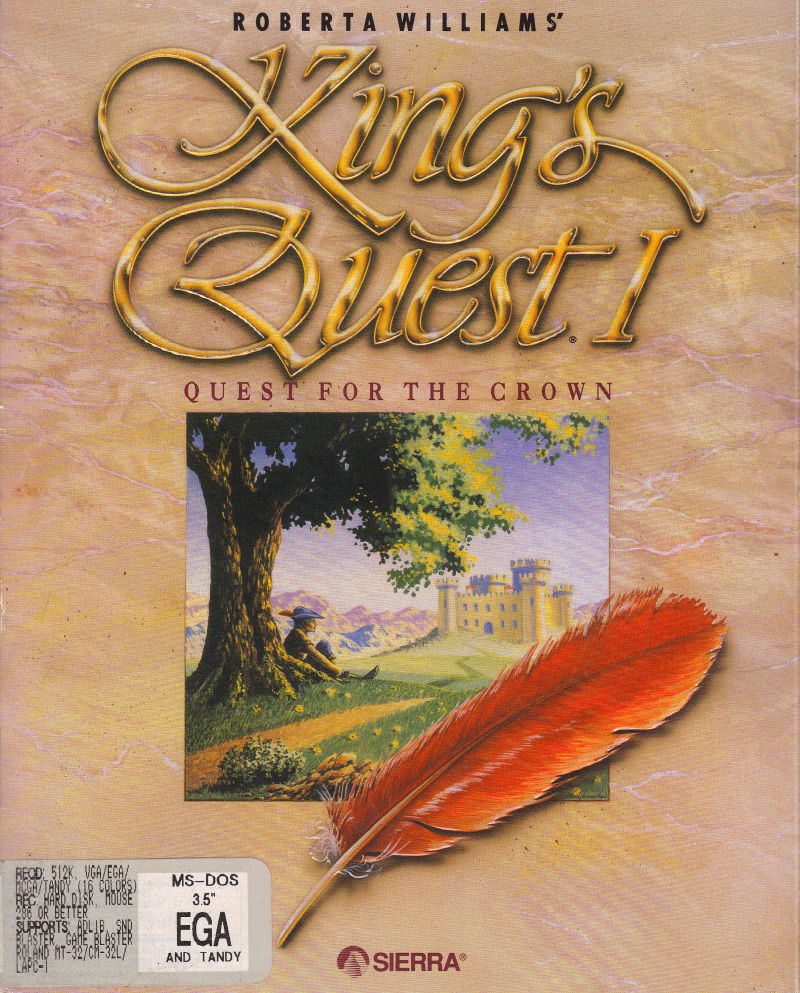
King’s Quest IQuest for the Crown
The fairytale adventure that taught the genre to move: Sir Graham, a text parser, pseudo-3D depth, visible character animation, and the first great Sierra quest that helped define what the graphic adventure could become.
Why it still matters
- Genre breakthrough: one of the key games that turned static adventure presentation into animated third-person exploration.
- Fairytale DNA: Sir Graham’s quest for three treasures gave Sierra a storybook fantasy identity that endured for decades.
- Parser-era purity: simple commands, screen-by-screen navigation, danger, experimentation, and triumph all feel unusually direct.
- Historical weight: it launched King’s Quest, helped build Sierra’s reputation, and became a foundation stone for the graphic adventure form.
“The moment adventure games stopped being still.”
Not merely the first King’s Quest — one of the clearest early statements of what the animated graphic adventure could be.
The Fairytale That Taught Adventures to Move
King’s Quest I is one of those rare archive pillars where historical importance and actual playable identity are inseparable. Before this era, many adventures still felt rooted in text, menus, or static illustrated rooms. Here, Graham is visibly present in the world.
He walks behind trees, around rocks, over bridges, and into danger. That physicality changed the emotional texture of adventure games. The kingdom of Daventry stopped feeling like a list of places and started feeling like a world you crossed.
At a glanceBest experienced as both a pioneering technical landmark and a harsh, charming fairytale quest full of parser logic, experimentation, and old-school danger.
Game Data
| Title | King’s Quest I: Quest for the Crown |
| Release Year | 1984 |
| Developer | Sierra On-Line |
| Publisher | IBM / Sierra On-Line |
| Designer | Roberta Williams |
| Original Platform | IBM PCjr |
| Genre | Graphic adventure / parser adventure |
| Players | 1 player |
| Original Format | Floppy disk |
| Protagonist | Sir Graham |
| Engine | Prototype AGI / early Sierra adventure technology |
| Core Loop | Explore, type, collect, survive, return with the treasures |
Gameplay pillars
Text parser interaction, animated third-person movement, screen-by-screen exploration, inventory-driven puzzle solving, fairy-tale object logic, and frequent danger states that reward observation and experimentation.
Story
King Edward of Daventry sends Sir Graham to recover three legendary treasures: a magic mirror, a protective shield, and a chest that never runs out of gold. Success restores the kingdom and earns Graham the crown itself.
Series-defining fact
This is the game that began the King’s Quest saga and helped establish Sierra’s long-running reputation as a leader in graphic adventure design.
Review / Why It Still Fascinates
The immediate magic of King’s Quest I lies in motion. Graham is not an abstract cursor or an invisible implied hero. He inhabits the screen. That may sound simple now, but in context it was transformational.
You are not merely selecting actions; you are guiding a knight through a world that has depth, distance, and physical vulnerability. That alone gives the game a very different rhythm from many earlier adventures.
The power of fairy-tale adventureDaventry feels like a collage of folklore: dragons, witches, dwarfs, bridges, forests, castles, and magical treasures. It is not realistic fantasy. It is dreambook fantasy — bright, dangerous, and often slightly cruel.
This is very much a 1984 adventure game. It can be unforgiving. Parser phrasing matters. Some hazards feel abrupt. Some solutions reward trial, memory, or external note-taking in a way modern players may find severe.
Why it still playsWhat keeps King’s Quest I alive is not polish in the modern sense, but clarity of imagination. The quest is simple. The world is legible. The goals are mythic. The discoveries feel personal because the player must work for them.
Final verdictKing’s Quest I remains historically indispensable and emotionally readable. It is rough, yes. It is old, undeniably. But it still communicates wonder, peril, and the thrill of discovery with unusual directness.
Why It Matters
King’s Quest I is historically important because it helped turn the adventure game from a primarily text-led or static-screen experience into something visibly animated and spatial. Graham moved through pseudo-3D environments, could walk behind and in front of objects, and made the world feel navigable rather than merely described.
It also mattered enormously for Sierra. The game became the beginning of the company’s flagship fantasy series and helped establish the studio’s reputation for combining technical ambition with storybook imagination.
Beyond the series itself, the game helped establish expectations for the graphic adventure form: visible protagonists, animated environments, typed commands paired with visual exploration, and worlds that felt like spaces to traverse instead of diagrams to decode.
Why it mattered then
It showcased a new kind of animated fantasy adventure and gave Sierra one of its defining early breakthroughs.
Why it matters now
It remains one of the clearest playable origin points for the graphic adventure’s visual and spatial language.
What it changed
It helped normalize third-person animated exploration, pseudo-3D scene depth, and the idea that adventure worlds could feel inhabited.
Timeline / Key Milestones
King’s Quest debuts as a technical showcase for the IBM PCjr and immediately stands out for its animated character movement and visual depth.
Sierra quickly brings the game to broader computer audiences, helping it escape the PCjr’s commercial limitations and reach bestseller status.
Ports arrive across systems including Amiga, Atari ST, Apple IIGS, Macintosh, and later the Master System, extending the game’s footprint.
Roberta Williams’ King’s Quest I: Quest for the Crown revisits the original with updated visuals and a more modern Sierra presentation.
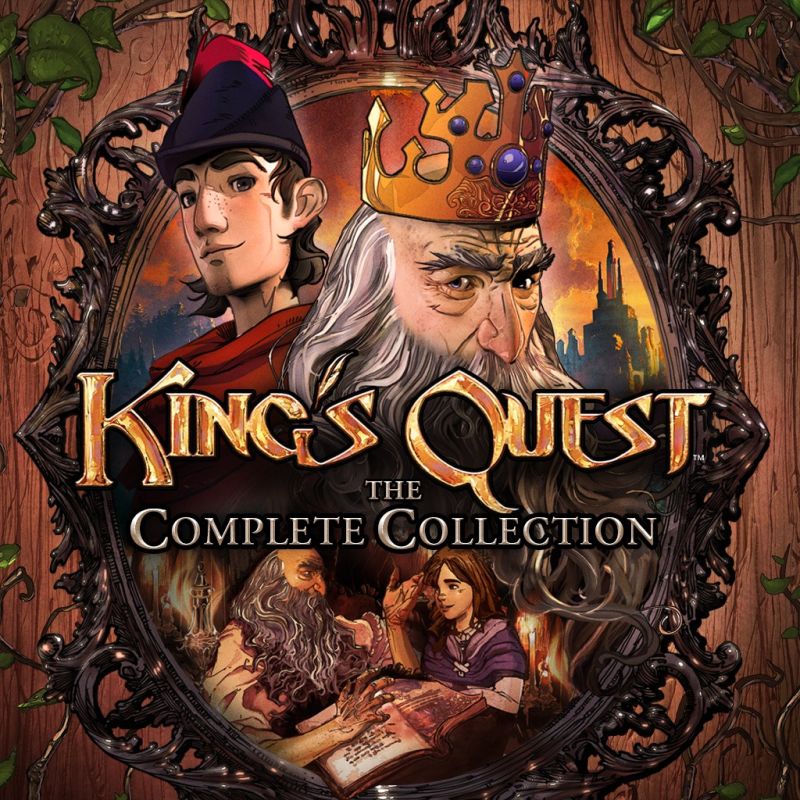
The official King’s Quest reboot returns Graham to the spotlight, reinforcing how foundational the first quest remained to the series mythology.
The original King’s Quest receives further long-view recognition as one of the most historically important games of its era.
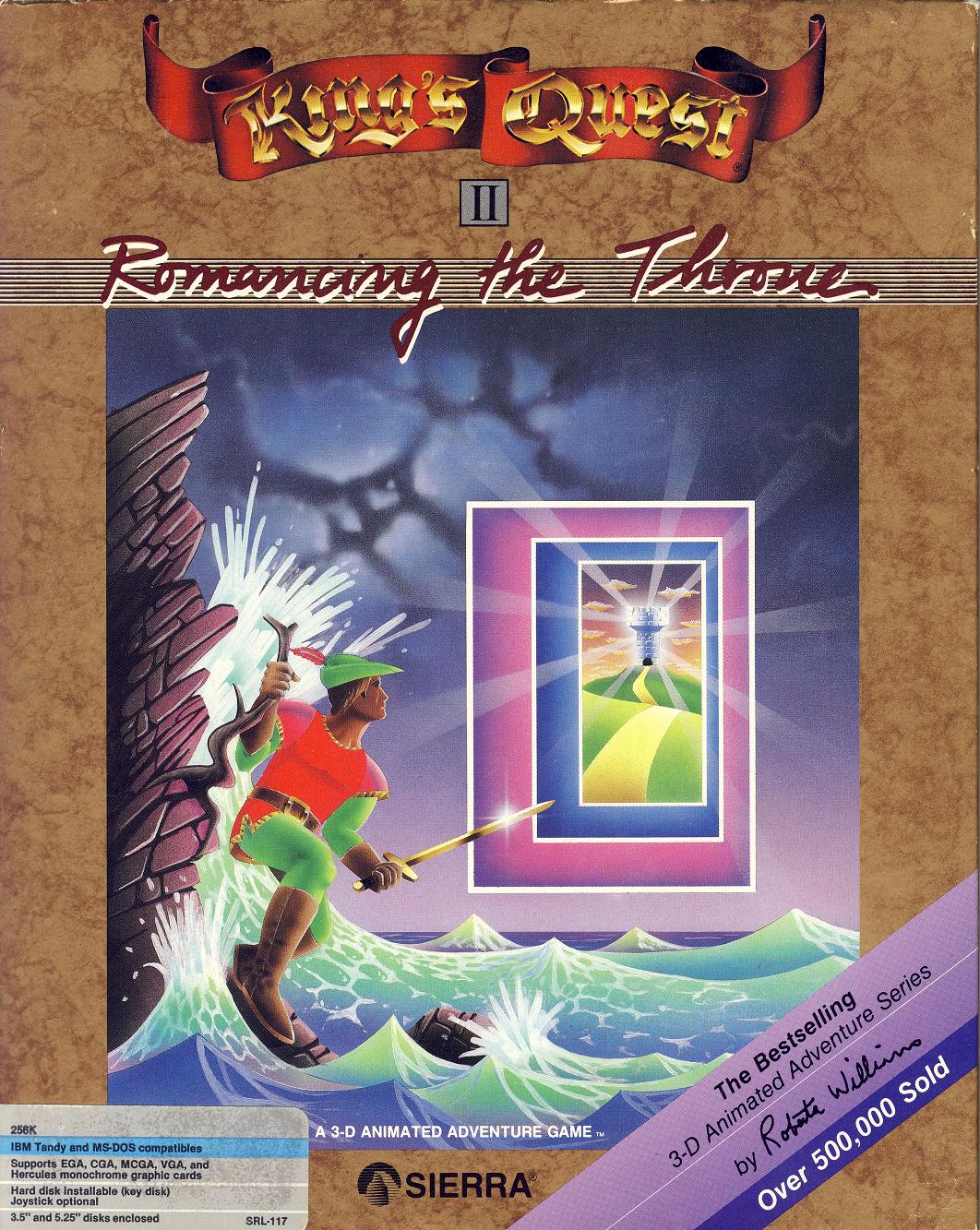
The fairytale became the foundation — but the Sierra box, floppy disks, manuals, maps, platform ports, remake editions, and Daventry imagery are the artifacts.
King’s Quest I belongs in the collector lane because it connects Sierra’s rise, Roberta Williams’ design legacy, IBM PCjr history, early PC adventure preservation, boxed floppy collecting, parser-era nostalgia, and the origin of one of adventure gaming’s most important fantasy lineages.
Where to Play / Collect Today
A foundational Sierra artifact with strong PC, boxed-floppy, manual, map, remake, and adventure-history collector appeal.
For collectors, King’s Quest I is especially interesting because it spans several lanes: early Sierra history, IBM PCjr context, boxed PC software preservation, platform variants, official remakes, series-lineage collecting, and the visual birth of Daventry as a recognizable fantasy world.
Amazon notice: As an Amazon Associate I earn from qualifying purchases.
A curated access point for adventure fans, Sierra collectors, and storybook-fantasy players: original boxed releases, modern collections, current marketplace listings, related books and accessories, and future handmade display pieces.
Shop King’s Quest collectibles
Browse current King’s Quest offers on eBay — ideal for classic Sierra boxes, floppy releases, manuals, guides, bundles, PC adventure collections, and collector-grade finds.
- Classic Sierra and King’s Quest listings
- Boxed editions, manuals, maps, and guides
- Condition, region, platform, and price comparison
Paid partner link / Werbung — availability, seller terms, shipping, and pricing depend on individual eBay sellers.
Browse related King’s Quest finds
Explore Amazon for King’s Quest-related items, Sierra adventure books, retro gaming guides, PC adventure history, fantasy-adventure extras, and broader storybook gaming collectibles.
- Books, guides, accessories, and merch
- Gift ideas and adventure-game extras
- Broader Sierra and PC-retro browsing
Paid partner link / Werbung — as an Amazon Associate, 4NERDS Gaming may earn from qualifying purchases.
Curated Etsy picks coming soon
Planned for handmade fantasy-retro art, Sierra-inspired display pieces, framed adventure maps, poster-style prints, shelf decor, and museum-style collectibles that match the 4NERDS archive aesthetic.
- Wall art and display-focused pieces
- Handmade and fan-crafted style items
- Added once the setup is ready
Etsy affiliate integration will be added after the tracking setup is approved and tested.