Mario Bros.Before the Mushroom Kingdom
The arcade game that turned Mario from a heroic carpenter into a plumbing icon, introduced Luigi to the action-game stage, and built a tense two-player arena out of pipes, turtles, crabs, fireballs, coins, and perfectly timed floor hits.
Why it still works
- Identity shift: this is where Mario and Luigi become the “Mario Bros.” and the plumbing / sewer setting takes root.
- Arcade purity: one screen, clear rules, escalating enemy behavior, and fast risk-reward decisions.
- Co-op tension: two players can cooperate, sabotage each other, or create beautiful chaos on the same arena.
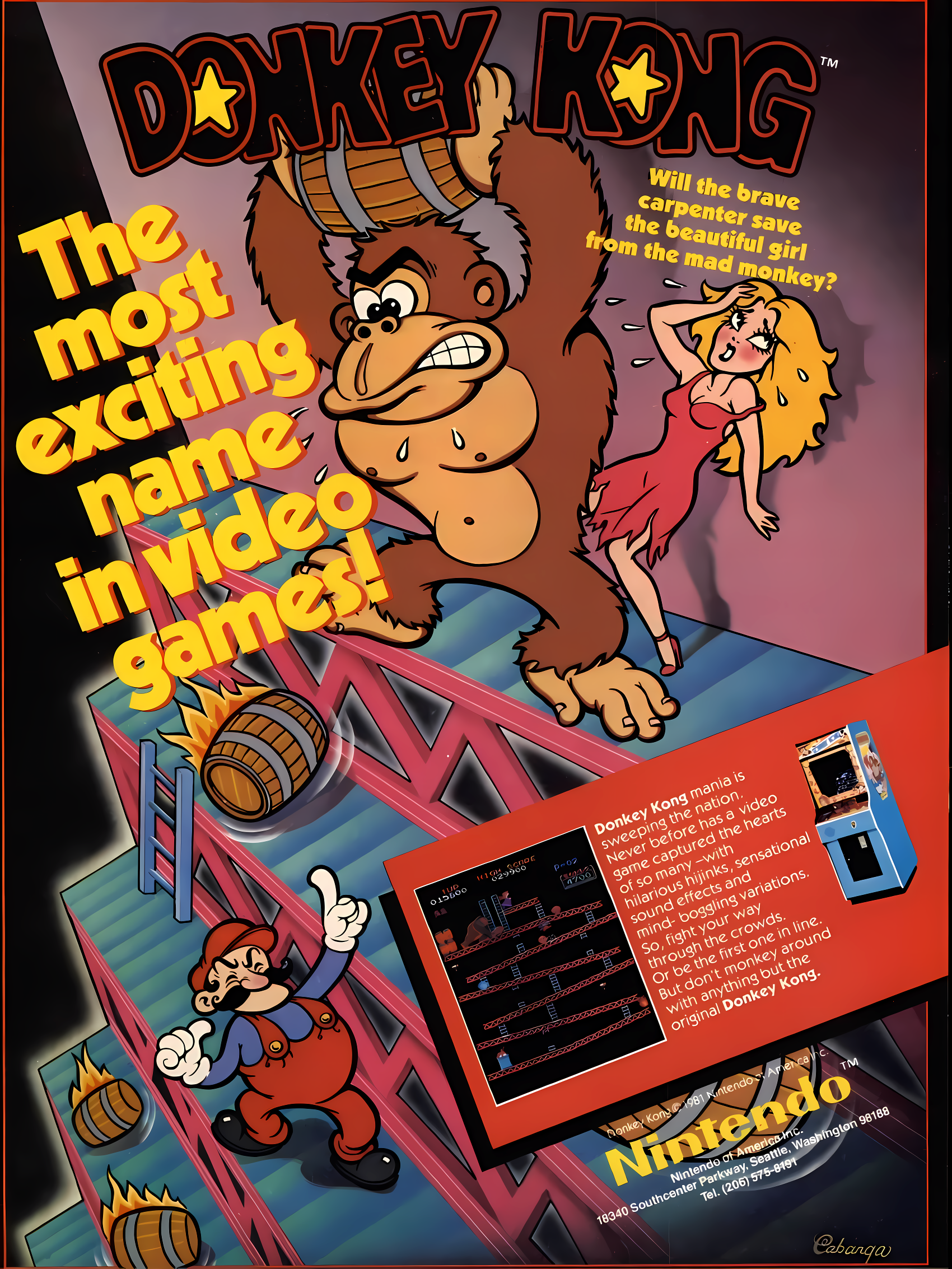
- Historical weight: it bridges Donkey Kong-era Mario and the later Super Mario phenomenon.
“Before the Mushroom Kingdom, there was the sewer.”
Mario Bros. is smaller than Super Mario Bros., but historically it is one of the most important steps in Mario’s transformation.
The Sewer Arena That Rebuilt Mario’s Identity
Mario Bros. is easy to underestimate if you only know Mario through side-scrolling adventures. There is no overworld, no princess rescue, no mushrooms, no flagpole, and no long left-to-right journey. Instead, the entire game is built around a single arena: enemies crawl out of pipes, Mario or Luigi punches the floor from below, flipped enemies become vulnerable, and every coin, fireball, and mistake becomes part of a tight arcade rhythm.
It is compact, funny, hostile, and mechanically much sharper than its simple screen suggests. Most importantly, it gives Mario a clearer identity: he is no longer only Jumpman from Donkey Kong — he is part of a named duo, in a physical job-world, surrounded by pipes, pests, slapstick danger, and two-player rivalry.
At a glanceBest understood as the missing evolutionary link between Donkey Kong’s Jumpman and the Super Mario Bros. icon that would dominate the NES era.
Game Data
| Title | Mario Bros. |
| Original Release | 1983 |
| Developer | Nintendo R&D1 |
| Publisher | Nintendo |
| Director | Shigeru Miyamoto |
| Producer | Gunpei Yokoi |
| Composer | Yukio Kaneoka |
| Original Platform | Arcade |
| Genre | Single-screen platform action |
| Players | 1–2 players |
| Original Format | Arcade cabinet |
| Core Loop | Hit floors, flip enemies, kick them away, collect coins, survive faster waves |
Gameplay pillars
Pipe-based enemy spawns, floor-bump attacks, enemy flipping, two-player interference, POW Block timing, bonus coins, increasing speed, and repeated arena mastery.
Enemies
Shellcreepers, Sidesteppers, Fighter Flies, Slipice, fireballs, and Freezies create a small but memorable cast of hazards with distinct movement logic.
Most famous design fact
Mario Bros. helped define Mario and Luigi as plumber brothers and made the sewer setting part of Mario’s early identity.
Review / Why It Still Plays So Well
The first surprise is how different Mario Bros. feels from the later Super Mario language. Mario does not simply jump on enemies. In fact, trying to treat this like Super Mario Bros. will get you punished quickly. The key verb is not the stomp; it is the floor hit.
You get underneath enemies, punch the platform, flip them over, then rush in before they recover. That tiny change makes the whole game feel more tactical, more positional, and more arcade-like.
The one-screen engineMario Bros. works because its single screen is not empty space. It is a machine. Pipes feed enemies into the arena, platforms create vertical reading, the POW Block offers emergency control, and coins tempt you into bad routes.
The two-player mode is where the design becomes especially funny. Mario and Luigi can work together, but the same tools that save your partner can also ruin them. One badly timed floor hit, one greedy coin grab, one chaotic dodge across the bottom level, and the whole screen turns into comedy.
Where it shows its ageMario Bros. is still a 1983 arcade game. Its loop is repetitive by modern standards, its screen count is limited, and its movement has a heavier, stranger feel than later Mario classics. But once the logic clicks, the design reveals itself as clean, deliberate, and surprisingly durable.
Final verdictMario Bros. is not the grand adventure that would make Mario a household name two years later. It is something more concentrated: a tight arcade survival game that quietly assembled major pieces of Mario’s identity. The brothers, the plumbing, the pipes, the slapstick danger, and the two-player rivalry all start to feel real here.
Why It Matters
Mario Bros. is historically important because it gives Mario a much clearer identity before the Super Mario era begins. Donkey Kong introduced the character in a rescue-platform context, but Mario Bros. makes him part of a named duo, places him and Luigi inside a plumbing world, and builds the action around pipes, pests, coins, and physical comedy.
The game also represents a key step in Nintendo’s understanding of character-based arcade design. Its rules are easy to explain but difficult to master: strike the platform, flip the enemy, finish the job, then survive the next wave. That simple loop gave Nintendo a strong bridge between early arcade scoring traditions and the more character-driven platform games that would soon define the company.
Its legacy is visible everywhere. Luigi becomes a recurring co-star. Pipes become central Mario language. Shell-like enemies and sewer spaces become part of the visual vocabulary. Even the idea that Mario games can be competitive, cooperative, and mischievously chaotic at the same time begins to feel fully alive here.
Why it mattered then
It turned Mario into part of a brother duo and gave Nintendo a memorable arcade format built around pipes, pests, and co-op chaos.
Why it matters now
It remains the clearest pre-Super Mario snapshot of how Mario’s identity was still being assembled.
What it changed
It helped establish Luigi, the plumber angle, the sewer setting, and the pipe-based action language that became central to Mario history.
Timeline / Key Milestones
Mario Bros. launches in arcades, giving Mario and Luigi a shared action-game identity and a single-screen sewer battle format.
The game reaches Nintendo’s Family Computer in Japan, helping bring the arcade formula into the home-console space.
Mario Bros. arrives on NES in North America, sitting beside the rapidly expanding Super Mario phenomenon.
Super Mario Bros. turns Mario into a scrolling platform icon, but many identity elements from Mario Bros. remain part of the franchise.
Mario Bros. appears through multiple reissues, ports, collections, and bonus-game appearances, keeping its compact arcade loop alive.
The original arcade game becomes available through modern classic-game releases, making it easier to revisit the arcade source today.
The sewer became the memory — but the arcade flyer, cabinet art, NES cart, Famicom version, manuals, reissues, and Mario history books are the artifacts.
Mario Bros. belongs in the collector lane because it connects Nintendo arcade history, Mario’s pre-Super identity, Luigi’s debut as a co-star, cabinet-era artwork, home-console ports, and the early vocabulary that later became central to the Mario universe.
Where to Play / Collect Today
A foundational Nintendo arcade artifact with strong Mario-history, cabinet, and home-port collector appeal.
For collectors, Mario Bros. is especially interesting because it sits at the crossroads: arcade Nintendo, Luigi’s early identity, pre-Mushroom-Kingdom Mario, Famicom and NES collecting, cabinet artwork, arcade flyers, and the visual language that later became core Mario history.
Amazon notice: As an Amazon Associate I earn from qualifying purchases.
A curated access point for Mario Bros. fans: arcade memorabilia, NES and Famicom versions, cartridges, manuals, flyers, cabinet pieces, books, accessories, and future handmade display objects.
Shop original Mario Bros. items
Browse current Mario Bros. offers on eBay — ideal for arcade memorabilia, NES and Famicom versions, cartridges, manuals, flyers, cabinet parts, and collector-grade finds.
- Arcade, NES, and Famicom-related listings
- Cartridges, manuals, flyers, and display pieces
- Condition, region, and price comparison
Paid partner link / Werbung — availability, condition, pricing, and shipping depend on individual eBay sellers.
Browse related Mario finds
Explore Amazon for Mario-related books, guides, themed accessories, Nintendo history items, retro-inspired extras, and broader Mario-universe products.
- Books, merch, and accessories
- Gift ideas and modern products
- Broader Mario-themed browsing
Paid partner link / Werbung — as an Amazon Associate, 4NERDS Gaming may earn from qualifying purchases.
Curated Etsy picks coming soon
Planned for handmade retro art, display objects, shelf pieces, prints, and museum-style collectibles that match the 4NERDS archive aesthetic.
- Wall art and display-focused pieces
- Handmade and fan-crafted style items
- Added once the setup is ready
Etsy affiliate integration will be added after the tracking setup is approved and tested.