- Movement excellence: Samus feels outrageously precise — slide, counter, free aim, and traversal upgrades all snap together.
- EMMI tension: the hunter-prey rhythm gives Dread a unique pressure that separates it from almost every other Metroid.
- Modern world design: ZDR constantly nudges, funnels, and surprises without losing the series’ core thrill of discovery.
- Historical weight: it proved that a premium 2D Metroid could return as a major modern Nintendo event and feel fully current.
“A modern Metroid that moves like a weapon.”
Metroid Dread does not merely revive the series — it sharpens it into one of the cleanest action-exploration games Nintendo has released in years.
The Return of 2D Metroid at Full Voltage
Metroid Dread feels important in the best possible way: not because it asks to be respected as a comeback, but because it earns that respect in motion. The controls are razor-clean, the map is designed with deliberate intelligence, and the entire experience understands the difference between simple nostalgia and real continuation. Dread is not trying to imitate old Metroid energy — it updates it. It takes the series’ long-standing ideas about exploration, isolation, and power growth, then runs them through a much faster, more aggressive design machine.
Game Data
| Title | Metroid Dread |
| Release Year | 2021 |
| Developer | MercurySteam / Nintendo EPD |
| Publisher | Nintendo |
| Platform | Nintendo Switch |
| Genre | Action-adventure |
| Players | Single-player |
| Original Format | Game card / digital download |
| Core Loop | Explore ZDR, gain abilities, evade E.M.M.I., defeat bosses, open the map wider |
Fast movement, free aim, slide mobility, melee counter flow, upgrade-driven exploration, sequence-break potential, lethal boss encounters, and the constant pressure of E.M.M.I. hunt zones.
After a mysterious transmission suggests the X parasite may still survive, Samus is sent to planet ZDR, where seven E.M.M.I. robots have gone silent and something far more dangerous is waiting.
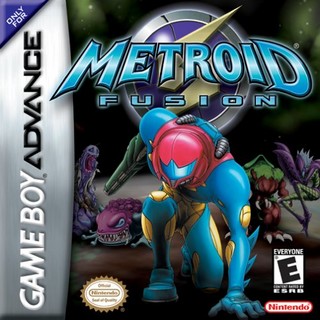
Dread is the first original side-scrolling Metroid since Fusion and transforms the long-rumored “Dread” concept into a sleek, modern, fully realized release.
Review / Why Metroid Dread Feels So Good to Play
The most immediate thing Dread gets right is that Samus simply feels incredible. The slide is fast and purposeful, the arm cannon feels locked to your intent, the melee counter no longer stops the entire game dead, and the full movement vocabulary gradually blooms into something beautiful. You are never merely navigating ZDR. You are cutting through it. That physical confidence changes everything, because Dread can ask more of the player precisely because the controls feel so trustworthy.
WHY THE WORLD WORKSZDR is very cleverly designed. It guides without feeling over-scripted, blocks without feeling arbitrary, and constantly recontextualizes old routes through new powers. Dread understands that modern players often want momentum, but it also understands that a Metroid map should never feel disposable. The result is a world that often nudges you forward just enough, while still preserving the pleasure of noticing that a door, shaft, or wall means something new now.
THE E.M.M.I. FACTORThe E.M.M.I. robots are the element that gives Dread its name real weight. These sections divide players a little, but their value is unmistakable: they inject vulnerability back into a game where Samus otherwise becomes increasingly dominant. In ordinary combat, you are an apex hunter. In E.M.M.I. zones, you are trespassing in someone else’s ruleset. That shift in power makes the game’s broader rhythm much more memorable.
BOSSES, SKILL, AND PAYOFFDread’s boss fights ask for actual execution. You need to read patterns, react with composure, and make clean use of the movement kit. That can make the game harsher than some players expect, but it is also one of the reasons the victories feel so good. The boss design does not want passive attrition. It wants recognition, response, and improvement. You feel yourself getting sharper, and the game respects that growth.
FINAL VERDICTMetroid Dread succeeds because it is not a museum piece. It is not content to be “the new 2D Metroid” and coast on goodwill. It is fast, proud, hostile, and mechanically polished. It revives the series by proving that the old structure still has power, but only when handled with this level of confidence. As a comeback, it is impressive. As a game, it is simply excellent.
Why Historically Important
Metroid Dread is historically important because it re-established side-scrolling Metroid as a modern premium release rather than a nostalgia exercise. For years, the idea of a new 2D Metroid carried a kind of mythic absence around it. Dread broke that absence decisively. It showed that the series’ old structural strengths — exploration, backtracking, power growth, hidden routes, careful map tension — could still headline a contemporary Nintendo game.
It also matters because of how it modernizes without flattening identity. Many revivals simplify or soften what made a classic special. Dread does the opposite. It keeps the feeling of isolation and threat, but layers on cleaner movement, smarter enemy readability, more kinetic combat, and a new strain of predator-like pressure through the E.M.M.I. system. That makes it an important example of legacy design being renewed rather than merely preserved.
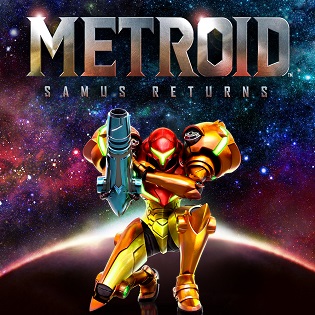
Just as importantly, Dread gave the 2D branch of Metroid a renewed cultural presence. It connected directly back to Fusion, validated the groundwork laid by Samus Returns, and reminded the wider industry that tightly designed exploratory action games can still feel prestigious, event-level, and mechanically modern. In that sense, Metroid Dread is both a sequel and a proof of life.
Timeline / Key Milestones
The “Metroid Dread” concept enters Nintendo lore during the DS era, becoming one of the most persistent rumors in the series’ history.
MercurySteam and Nintendo EPD collaborate on Metroid: Samus Returns, laying much of the technical and design groundwork for Dread’s eventual revival.
Nintendo finally unveils Metroid Dread at E3-season Nintendo Direct, confirming the long-rumored title as a real, imminent release.
Metroid Dread releases on Nintendo Switch and quickly reasserts 2D Metroid as one of Nintendo’s sharpest modern action-adventure series.
Rookie Mode, Dread Mode, and multiple Boss Rush variants expand the game’s replay value and make its challenge structure even more flexible.
Dread remains a defining current-era reference point for high-end side-scrolling exploration design, movement feel, and difficulty tuning.
4NERDS Collector Marketplace
A curated access point for players, collectors, and Metroid fans: physical copies, special editions, books, guides, accessories, display pieces, and modern related items — clearly marked as partner links where applicable.
Shop Metroid Dread copies
Browse current Metroid Dread offers on eBay — useful for standard Switch copies, special editions, steelbook variants, amiibo bundles, collector listings, and price comparisons.
- Switch physical copies and special editions
- Steelbook, amiibo and launch-era collectibles
- Condition and price comparison
Paid partner link / Werbung — availability and pricing depend on eBay sellers.
Browse related Metroid finds
Explore Amazon for Metroid Dread items, Switch copies, guides, art books, Nintendo accessories, figures, posters, and broader Samus-themed collectibles.
- Games, guides and accessories
- Modern Metroid-related products
- Broader Nintendo sci-fi browsing
Paid partner link / Werbung — as an Amazon Associate, 4NERDS Gaming may earn from qualifying purchases.
Curated Etsy picks coming soon
Planned for handmade sci-fi retro art, Samus-inspired display pieces, Metroid-style prints, shelf objects, and museum-style collectibles that match the 4NERDS archive aesthetic.
- Wall art and display-focused pieces
- Handmade and fan-crafted style items
- Added once the setup is ready
Etsy affiliate integration will be added after the tracking setup is approved and tested.
Transparency note: 4NERDS Gaming does not sell these items directly. External shops, prices, stock, shipping terms, and seller conditions may change at any time. eBay and Amazon links in this section are sponsored / paid partner links. Etsy is currently shown as an upcoming integration and does not link out yet.