The Legend of Zelda:Link’s Awakening
A compact, dreamlike Zelda that turned the Game Boy into a real adventure machine: shipwrecked mystery, elegant dungeon design, strange island melancholy, and a finale that lingers far longer than its small screen suggests.
Why it still works
- Portable breakthrough: it proved Zelda could feel complete, rich, and substantial on a handheld.
- Compact brilliance: Koholint Island is dense, memorable, and wonderfully efficient in how it unfolds.
- Emotional texture: beneath the bright surface is one of the series’ most quietly haunting moods.
- Historical weight: it became the template for how big Nintendo adventures could be miniaturized without feeling diminished.
“Small screen, huge heart, unforgettable aftertaste.”
Link’s Awakening is portable design becoming its own art, not simply a reduced copy.
A Handheld Zelda That Never Felt Small
Link’s Awakening remains one of Nintendo’s sharpest acts of compression. It takes the structure, mystery, and dungeon-driven rhythm of larger Zelda adventures and condenses them into something tighter, stranger, and more intimate.
Koholint Island feels personal in a way many bigger worlds do not: a place of odd villagers, recurring melodies, portable routines, and a mood that shifts from playful to quietly unsettling without ever breaking its spell.
At a glanceBest experienced as a handheld landmark, a beautifully paced island adventure, and one of the series’ most dreamlike narrative detours.
Game Data
| Title | The Legend of Zelda: Link’s Awakening |
| Release Year | 1993 |
| Developer | Nintendo |
| Publisher | Nintendo |
| Platform | Game Boy |
| Later Versions | Link’s Awakening DX (1998), Nintendo Switch remake (2019), Nintendo Classics / archival reissues |
| Genre | Action-adventure |
| Players | 1 player |
| Original Format | Cartridge |
| Core Loop | Explore island, solve dungeons, gather instruments, awaken the Wind Fish |
Gameplay pillars
Top-down exploration, compact item-gated progression, puzzle-heavy dungeons, secret routes, trading-sequence charm, and carefully layered island backtracking.
Story
After a storm wrecks his ship, Link washes ashore on Koholint Island. To escape, he must gather the eight Instruments of the Sirens and awaken the sleeping Wind Fish.
Most famous design fact
Link’s Awakening was the first full-sized Zelda adventure built for a handheld, and it established that portable entries could feel just as complete as console ones.
Review / A Pocket Epic with a Dreamlike Soul
The most impressive thing about Link’s Awakening is how quickly it feels complete. There is no sense of compromise in the opening stretch. The island has identity immediately, the movement and item use feel purposeful, and the adventure begins with the same clean Zelda promise as its console cousins: explore, understand, return stronger.
Why the island worksKoholint is one of Nintendo’s strongest small overworlds. It is dense without feeling cramped and mysterious without becoming confusing. Because the map is compact, every new item changes your relationship with the whole world.
Link’s Awakening succeeds because it understands the handheld form instead of fighting it. Sessions can be short, but progress still feels meaningful. NPC encounters are brief but distinct, and the trading sequence adds humor and texture without bloating the structure.
Tone and aftertasteWhat truly sets Link’s Awakening apart is mood. It can be cute, funny, and playful, but it also carries a strange softness and unease. The music, the islanders, the recurring dream logic, and the emotional pull of Marin make it very different from straightforward heroic fantasy.
Final verdictLink’s Awakening is not merely “great for a handheld.” It is great, full stop. Compact, clever, and emotionally lingering, it still stands as one of Nintendo’s most elegantly designed adventures.
Why It Matters
Link’s Awakening is historically important because it proved the Zelda formula could survive the move to handheld hardware without feeling reduced. Before it, portable versions of major console adventures still carried the risk of seeming secondary. Link’s Awakening erased that fear by delivering a real, substantial quest on the Game Boy.
It also mattered because it showed how much power there is in compression. The game does not try to imitate console scale point-for-point. Instead, it distills the pleasures of Zelda into a tighter island map, smaller but memorable dungeons, and highly efficient progression.
Finally, Link’s Awakening gave Zelda one of its most unusual emotional registers. Koholint is not just a puzzle box; it is a place with a dreamlike sadness that separates the game from the series’ more conventional heroic arcs.
Why it mattered then
It made Zelda feel fully legitimate on a handheld and gave the Game Boy one of its defining prestige adventures.
Why it matters now
It remains one of the clearest examples of compact world design, portable pacing, and emotionally unusual Nintendo storytelling.
What it changed
It established that handheld Zelda could be complete, sophisticated, and creatively distinct — not just a side branch.
Timeline / Key Milestones
Link’s Awakening arrives on Game Boy and proves that a true, full-scale Zelda adventure can work on portable hardware.
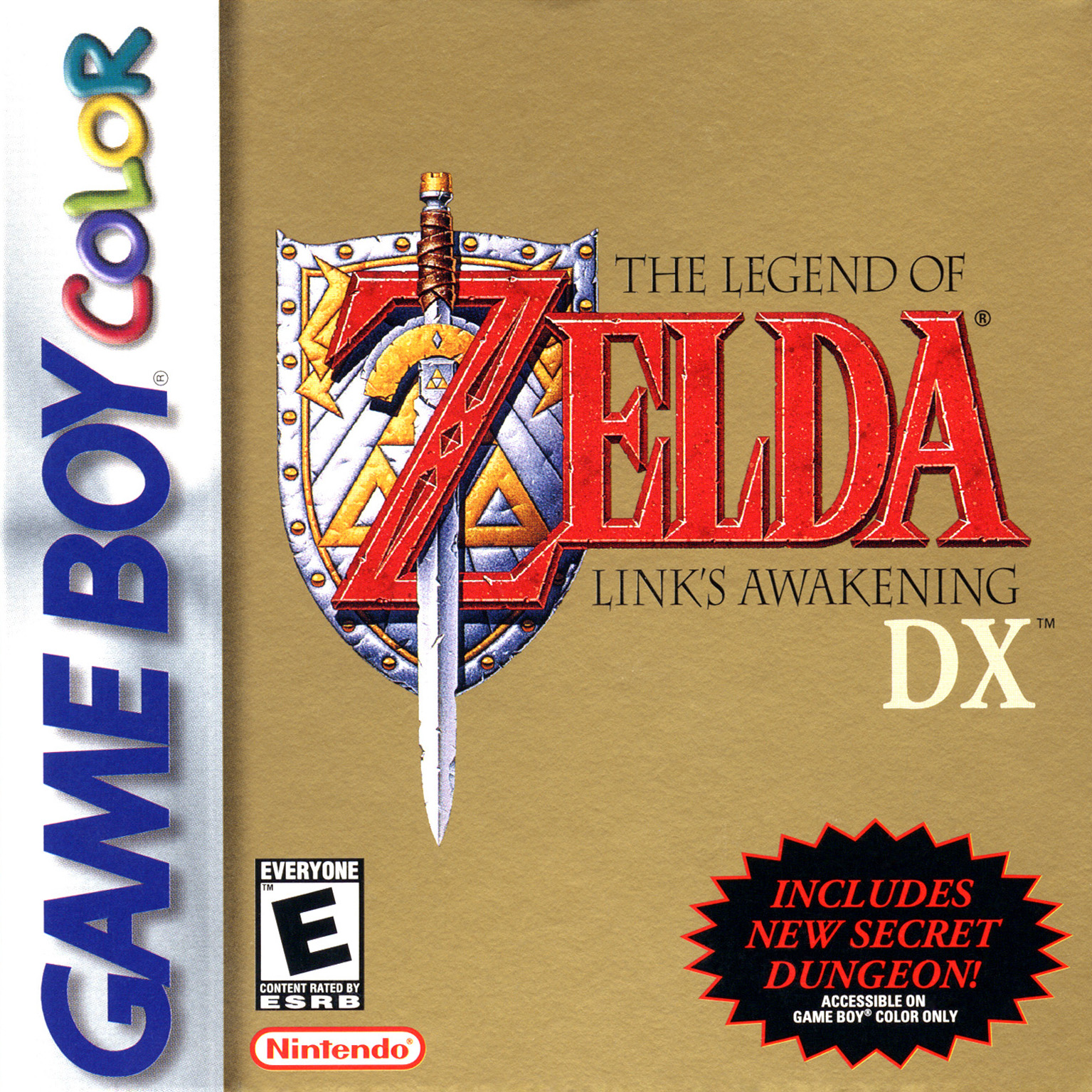
The Game Boy Color enhancement adds color graphics and the exclusive Color Dungeon, giving the adventure a second major life.
The game’s reputation grows as one of the finest portable action-adventures ever made and a foundational Zelda for handheld fans.
Nintendo revisits the game on Switch with a toy-like visual style, modern conveniences, and renewed attention on Koholint Island.
Link’s Awakening remains one of the clearest examples of how to make a world feel rich, complete, and emotionally memorable within a small format.
Koholint became portable Zelda’s emotional benchmark — and the Game Boy cartridge, DX edition, box art, and remake are the artifacts.
Link’s Awakening belongs in the collector lane because it connects original Game Boy prestige, the DX color era, modern Switch nostalgia, Koholint’s emotional identity, and one of the most important handheld design lessons in Nintendo history.
Where to Play / Collect Today
A handheld Zelda artifact with deep collector appeal.
For collectors, Link’s Awakening is appealing because it spans multiple collecting lanes: original Game Boy cartridge culture, boxed 1990s Nintendo packaging, Game Boy Color DX nostalgia, Switch remake display pieces, guides, books, and Koholint-themed extras.
Amazon notice: As an Amazon Associate I earn from qualifying purchases.
A curated access point for Link’s Awakening fans: original Game Boy copies, DX editions, boxed variants, manuals, Zelda books, guides, Switch remake items, display pieces, and broader Koholint collector finds.
Shop original Game Boy copies
Browse current Link’s Awakening offers on eBay — ideal for loose cartridges, boxed copies, manuals, DX editions, and collector-grade listings.
- Original Game Boy and Game Boy Color copies
- Boxed versions, manuals, inserts, and regional variants
- Condition and price comparison
Paid partner link / Werbung — availability, condition, pricing, and shipping depend on individual eBay sellers.
Browse Zelda and Koholint finds
Explore Amazon for Zelda-related books, guides, Switch remake items, accessories, collector extras, and broader Nintendo-themed products.
- Zelda books, guides, merch, and accessories
- Switch remake and Koholint-related items
- Gift ideas and modern Nintendo products
Paid partner link / Werbung — as an Amazon Associate, 4NERDS Gaming may earn from qualifying purchases.
Curated Etsy picks coming soon
Planned for handmade Zelda-inspired art, Koholint Island prints, display objects, shelf pieces, and museum-style collector items that match the 4NERDS archive aesthetic.
- Wall art and display-focused pieces
- Handmade and fan-crafted style items
- Added once the setup is ready
Etsy affiliate integration will be added after the tracking setup is approved and tested.