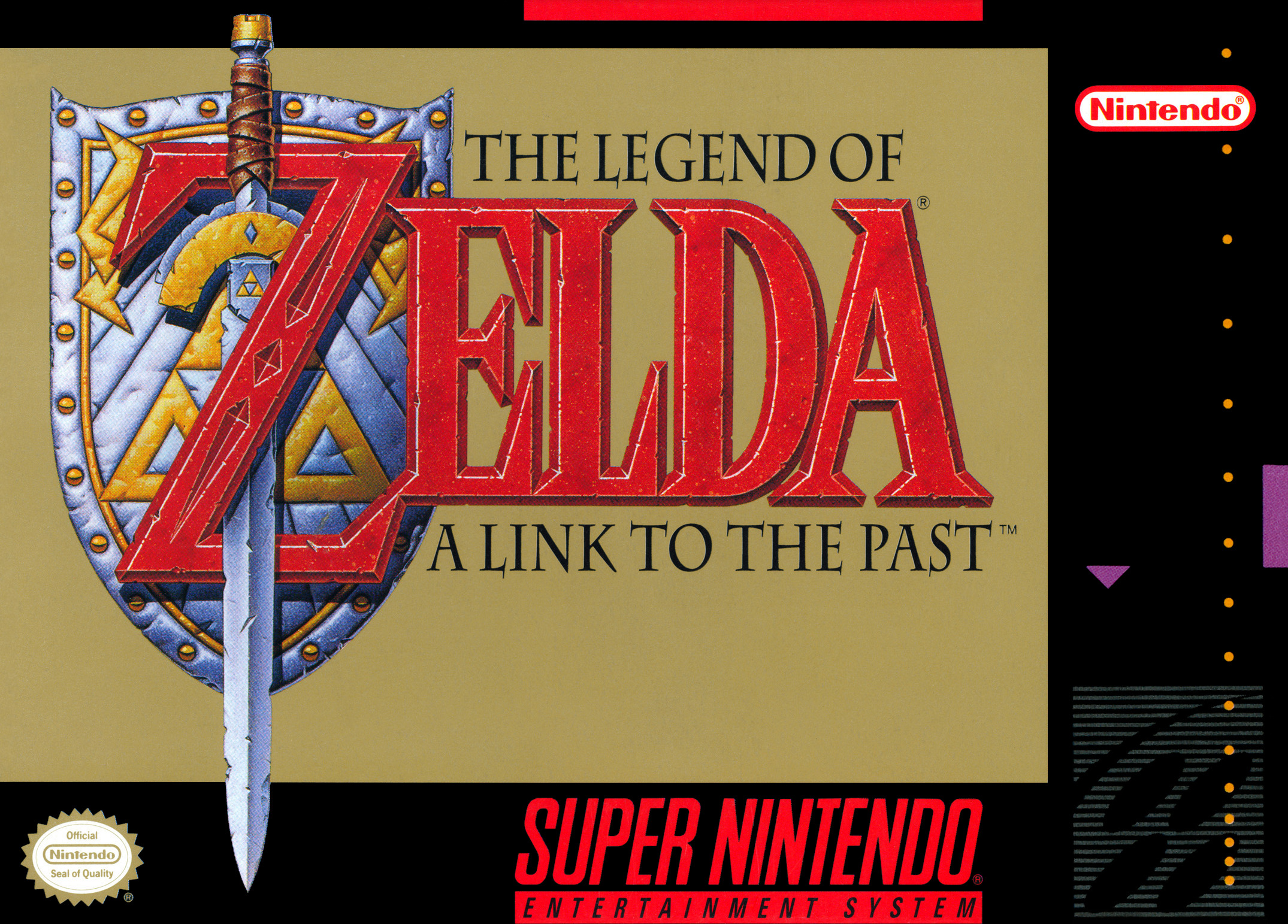
The Legend of Zelda:Ocarina of Time
The moment Zelda stepped into 3D and somehow made it feel natural immediately: a world built for wonder, dungeons designed like memory palaces, and a combat camera system so clean it became part of the grammar of modern action-adventure games.
Why it still works
- 3D solved elegantly: movement, camera, auto-jump, lock-on combat, and spatial puzzle design all click together with rare confidence.
- World structure: child and adult eras turn Hyrule into both a place and a before-and-after memory.
- Dungeon quality: Forest, Water, Spirit, Shadow — this is one of the richest runs of adventure dungeons ever made.
- Historical force: it did not merely succeed in 3D; it helped define how 3D action-adventure games would communicate and fight.
“A game that taught 3D adventure how to breathe, look, and duel.”
Ocarina of Time is not only remembered for its scale — it is remembered because its ideas became design language.
The Game That Made 3D Zelda Feel Inevitable
Ocarina of Time still feels remarkable because it arrived at a moment when 3D game design was full of uncertainty and answered that uncertainty with clarity. Instead of overwhelming the player with awkward systems, it makes 3D feel legible: where to stand, what to lock onto, how to read space, when to jump, how to circle an enemy, how to remember a room, and how to understand a world that changes with age, power, and time.
It is a landmark not because it is old, but because so many of its solutions still feel clean. The game does not simply translate Zelda into 3D. It teaches the player a new language and then trusts that language enough to build a myth around it.
At a glanceBest experienced as both a legendary first-contact 3D adventure and a still-powerful study in spatial combat, musical identity, and world progression.
Game Data
| Title | The Legend of Zelda: Ocarina of Time |
| Release Year | 1998 |
| Developer | Nintendo |
| Publisher | Nintendo |
| Platform | Nintendo 64 |
| Later Versions | GameCube bonus disc / Master Quest, Wii / Wii U Virtual Console, Nintendo 3DS, Nintendo Switch Online + Expansion Pack |
| Genre | 3D action-adventure |
| Players | 1 player |
| Original Format | Cartridge |
| Core Loop | Explore, lock on, puzzle solve, time-shift, dungeon clear, awaken sages |
Gameplay pillars
Z-targeting combat, contextual auto-jump, child/adult time structure, ocarina song utility, spatial dungeon puzzles, horseback traversal, item-based world unlocking, and boss encounters built around pattern recognition plus positioning.
Story
Link leaves Kokiri Forest after being called by the Great Deku Tree, learns of Ganondorf’s ambition, draws the Master Sword too early, and awakens seven years later in a ruined future. To restore Hyrule, he must gather the sages and confront the King of Evil.
Most famous design fact
The lock-on combat system — Z-targeting — did more than help with aiming. It stabilized 3D encounters, camera logic, movement arcs, and one-on-many combat in a way that influenced the entire genre.
Review / Why Ocarina of Time Still Feels Monumental
What still impresses in Ocarina of Time is how quickly it turns uncertainty into confidence. Kokiri Forest begins small, but not cramped. It teaches scale gently. You learn to read height, direction, interaction prompts, conversation distance, and spatial focus.
By the time Hyrule Field opens, the game has already established trust: the player feels that this 3D world can be understood, and that is a larger achievement than it may sound.
Why Z-targeting matteredPlenty of games moved into 3D. Far fewer made close-range combat feel readable. Ocarina of Time solved that by turning the camera, enemy focus, and player movement into one conversation. Locking on is not merely a convenience feature here; it changes the shape of encounters.
Hyrule works because it is not only large; it is emotionally legible. Child Link’s world is curious, bright, and half-understood. Adult Link’s world is scarred, haunted, and more solemn. The jump across seven years gives the game one of its strongest powers: places become memories.
Dungeons as 3D theatreThe dungeons remain formidable because they are not just puzzle boxes; they are stagecraft. The Forest Temple turns disorientation into atmosphere. The Water Temple became infamous, but its reputation also reflects how seriously the game took spatial complexity. Shadow and Spirit feel mythic.
Final verdictOcarina of Time remains one of gaming’s greatest design transitions: a beloved 2D series stepping into 3D without losing identity, and in many ways becoming more itself. It still feels deliberate, emotional, and structurally elegant.
Why It Matters
Ocarina of Time is historically important because it helped define how 3D action-adventure games could function at a basic language level. Z-targeting stabilized combat, conversation distance, and camera logic. Auto-jump reduced friction. Movement became expressive without becoming chaotic.
It also mattered because it gave 3D world design a sense of narrative memory. Hyrule is not just a backdrop; it is a place you know first as a child and later as an adult, before and after collapse. That gives the journey unusual weight.
Even now, when people talk about influential combat cameras, lock-on systems, adventure dungeons, or the moment a long-running series made a convincing leap into a new dimension, Ocarina of Time remains one of the cleanest and most durable reference points.
Why it mattered then
It proved that a large, cinematic, puzzle-heavy 3D adventure could feel playable rather than awkward.
Why it matters now
It remains one of the clearest examples of how camera, movement, combat, and atmosphere can reinforce each other.
What it changed
It helped standardize lock-on combat, spatial dungeon logic, and the design confidence of the modern 3D action-adventure form.
Timeline / Key Milestones
Ocarina of Time arrives on Nintendo 64 and becomes the series’ decisive 3D breakthrough, mixing combat innovation, expansive world design, and cinematic scale.
Z-targeting, contextual jumping, one-on-many combat staging, and dungeon-based world progression become central reference points for the genre.
The rearranged Master Quest version extends the game’s afterlife and deepens its reputation among players who already knew the original inside out.
Nintendo 3DS receives a full remake with visual upgrades, interface improvements, and motion-aided aiming, helping a new generation meet the game in refreshed form.
Through Nintendo’s Nintendo 64 Classics library on Switch Online + Expansion Pack, the original remains part of the active playable canon rather than a distant legend.
The gold box became the promise — but the cartridge, Collector’s Edition, Master Quest disc, 3DS remake, guides, and art are the artifacts.
Ocarina of Time belongs in the collector lane because it connects Nintendo 64 prestige, gold-cartridge nostalgia, premium packaging, 3DS remake rediscovery, Master Quest history, and one of the most important design legacies in adventure gaming.
Where to Play / Collect Today
A landmark Zelda artifact with major Nintendo 64 collector appeal.
For collectors, Ocarina of Time is appealing because it spans several strong lanes: original N64 cartridge culture, gold Collector’s Edition nostalgia, boxed 1998-era Nintendo packaging, Master Quest history, 3DS remake items, guides, books, and Hyrule display pieces.
Amazon notice: As an Amazon Associate I earn from qualifying purchases.
A curated access point for Ocarina of Time fans: original Nintendo 64 copies, boxed editions, manuals, 3DS remake items, Zelda books, guides, accessories, display pieces, and broader Hyrule collector finds.
Shop original N64 copies
Browse current Ocarina of Time offers on eBay — ideal for gold cartridges, boxed editions, manuals, regional variants, and collector-grade listings.
- Original Nintendo 64 cartridges and boxes
- Collector’s Edition, manuals, and regional variants
- Condition and price comparison
Paid partner link / Werbung — availability, condition, pricing, and shipping depend on individual eBay sellers.
Browse Zelda and Hyrule finds
Explore Amazon for Zelda-related books, strategy guides, 3DS remake items, accessories, collector extras, and broader Nintendo-themed products.
- Zelda books, guides, merch, and accessories
- Ocarina of Time 3D and modern collector items
- Gift ideas and broader Nintendo products
Paid partner link / Werbung — as an Amazon Associate, 4NERDS Gaming may earn from qualifying purchases.
Curated Etsy picks coming soon
Planned for handmade Ocarina of Time-inspired art, Hyrule prints, shelf objects, cartridge display pieces, and museum-style collector items that match the 4NERDS archive aesthetic.
- Wall art and display-focused pieces
- Handmade and fan-crafted style items
- Added once the setup is ready
Etsy affiliate integration will be added after the tracking setup is approved and tested.